Lucy Lie and Thomas Laprade
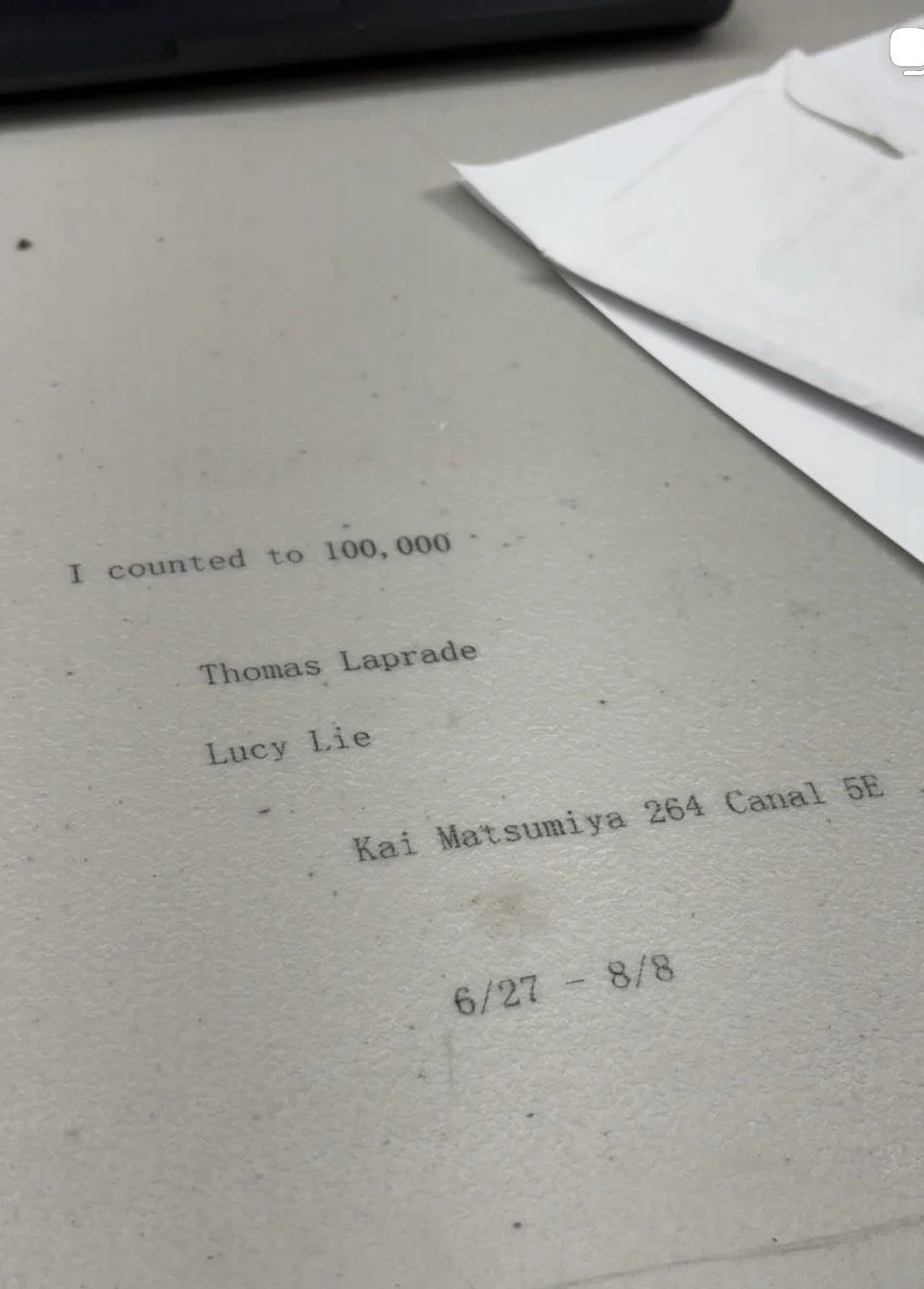
I counted to 100,000
June 27th - August 8th
Opening Reception: Saturday, June 27th (6-8pm)
I Counted to 100,000 approaches the exhibition as a generative system. Borrowing its title from the seemingly absurd act of counting to an impossibly large number, I Counted to 100,000 examines the tension between enumeration and indeterminacy. Counting promises certainty by reducing an immeasurably complex world into discrete units. Contemporary culture extends this logic through algorithms, financial indices, productivity metrics, polling, and social media, where numbers increasingly function as narratives in themselves, like a dismayed cloud of electronic mysticism.
The exhibition proposes something else: every system of measurement, no matter how rigorous, inevitably generates its own noise. Rather than treating noise as interference or unnecessary information, the exhibition understands it as the condition through which viable forms of knowledge, experience, and narrative emerge.
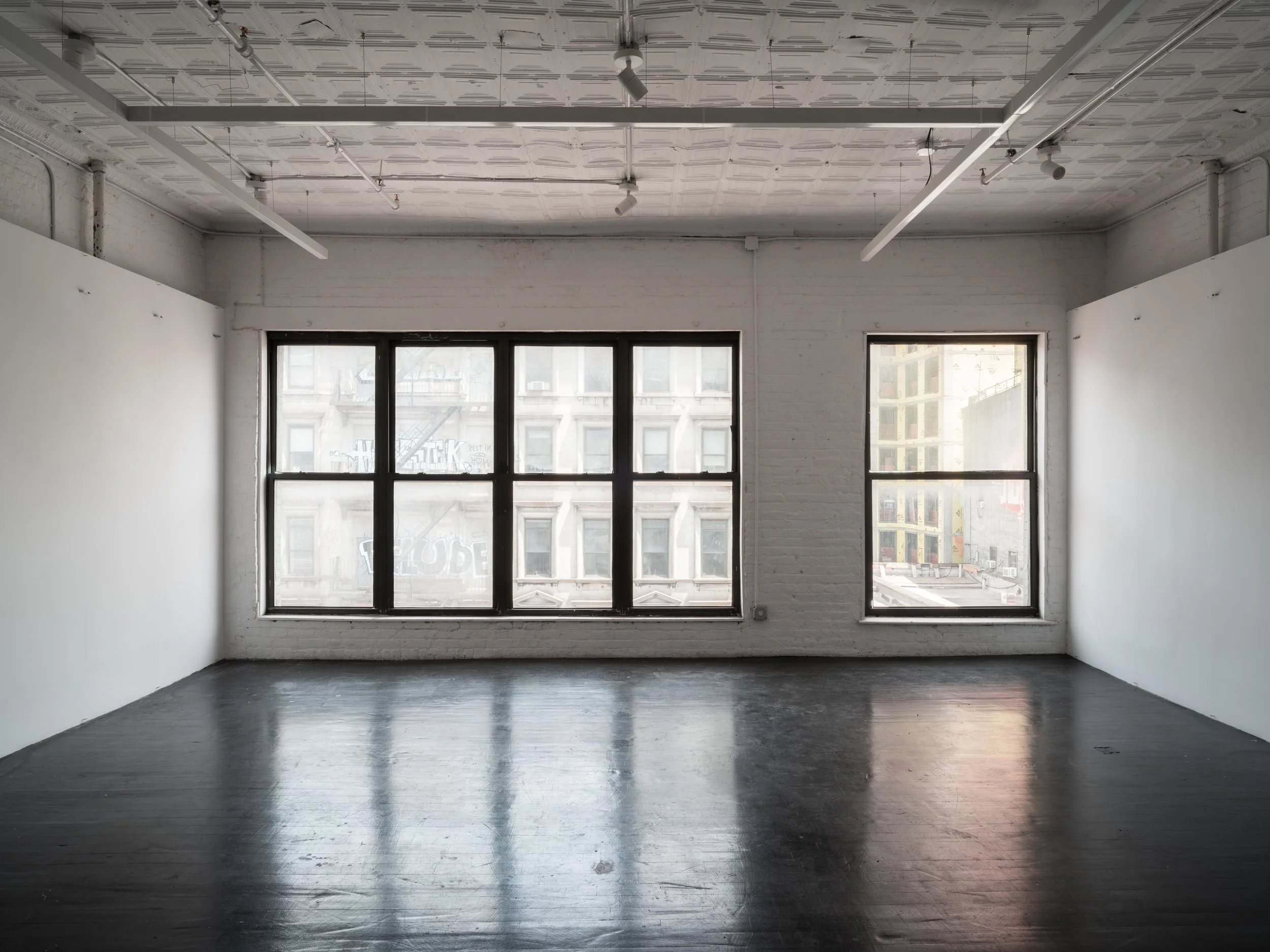
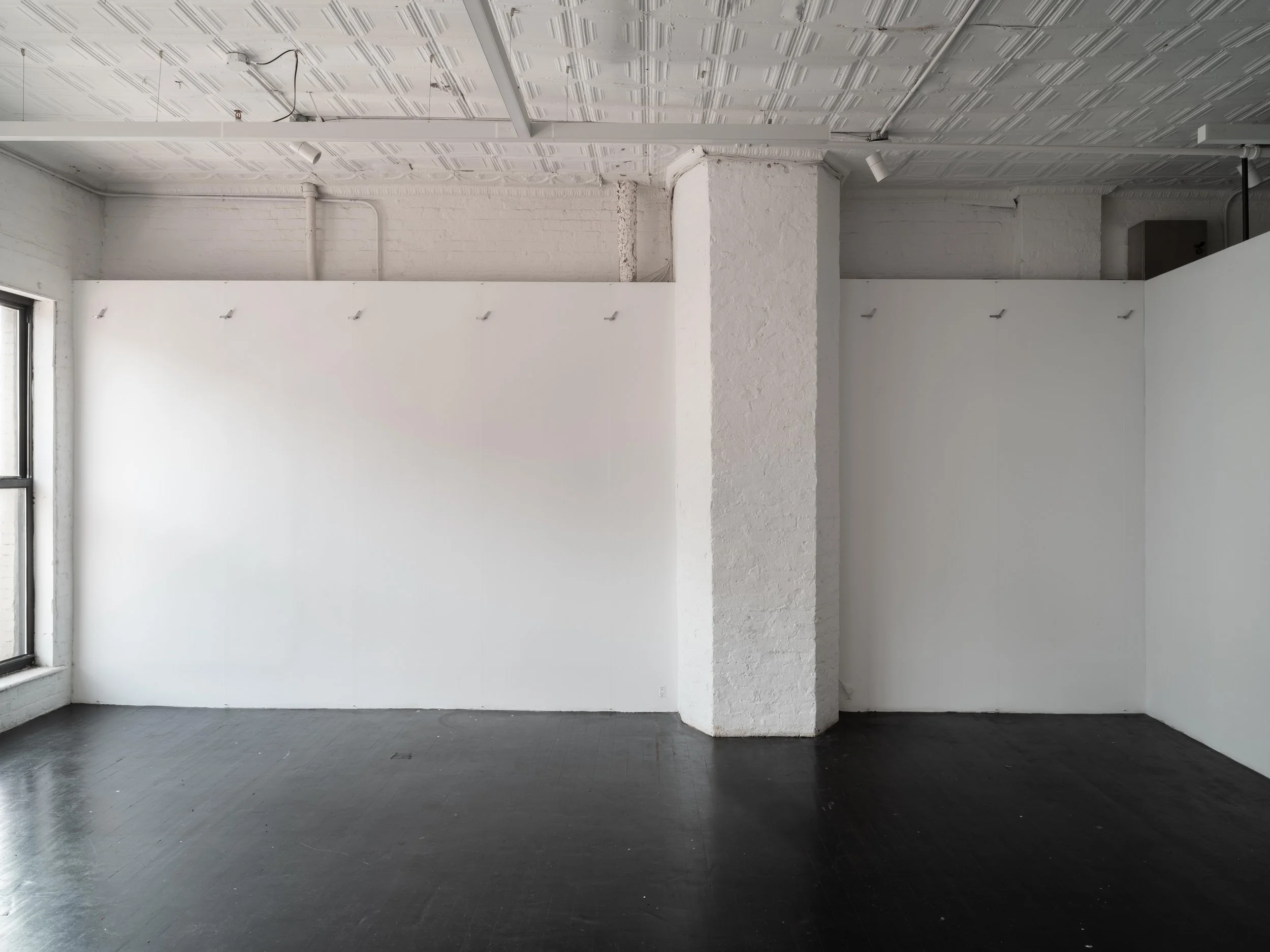
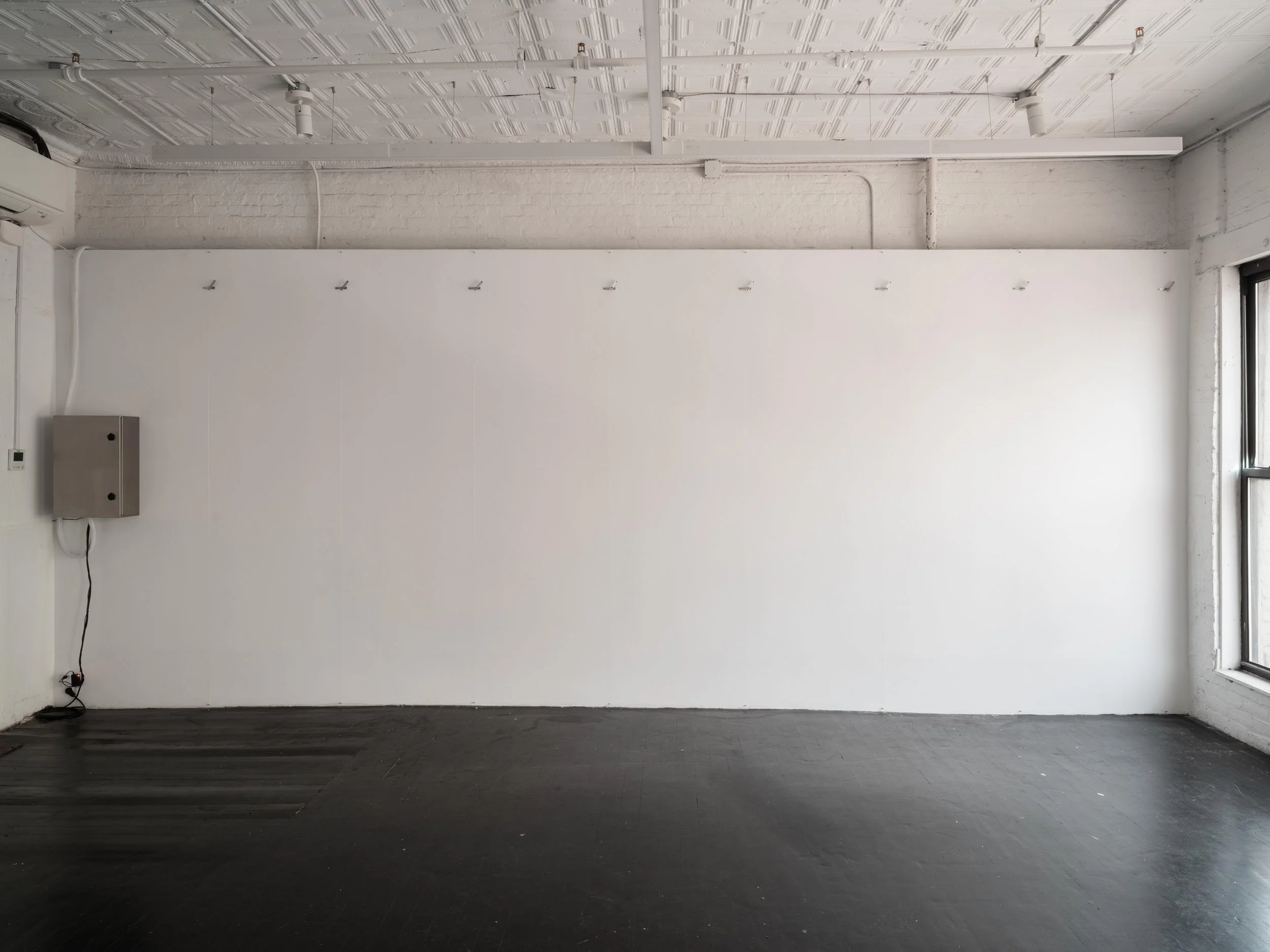
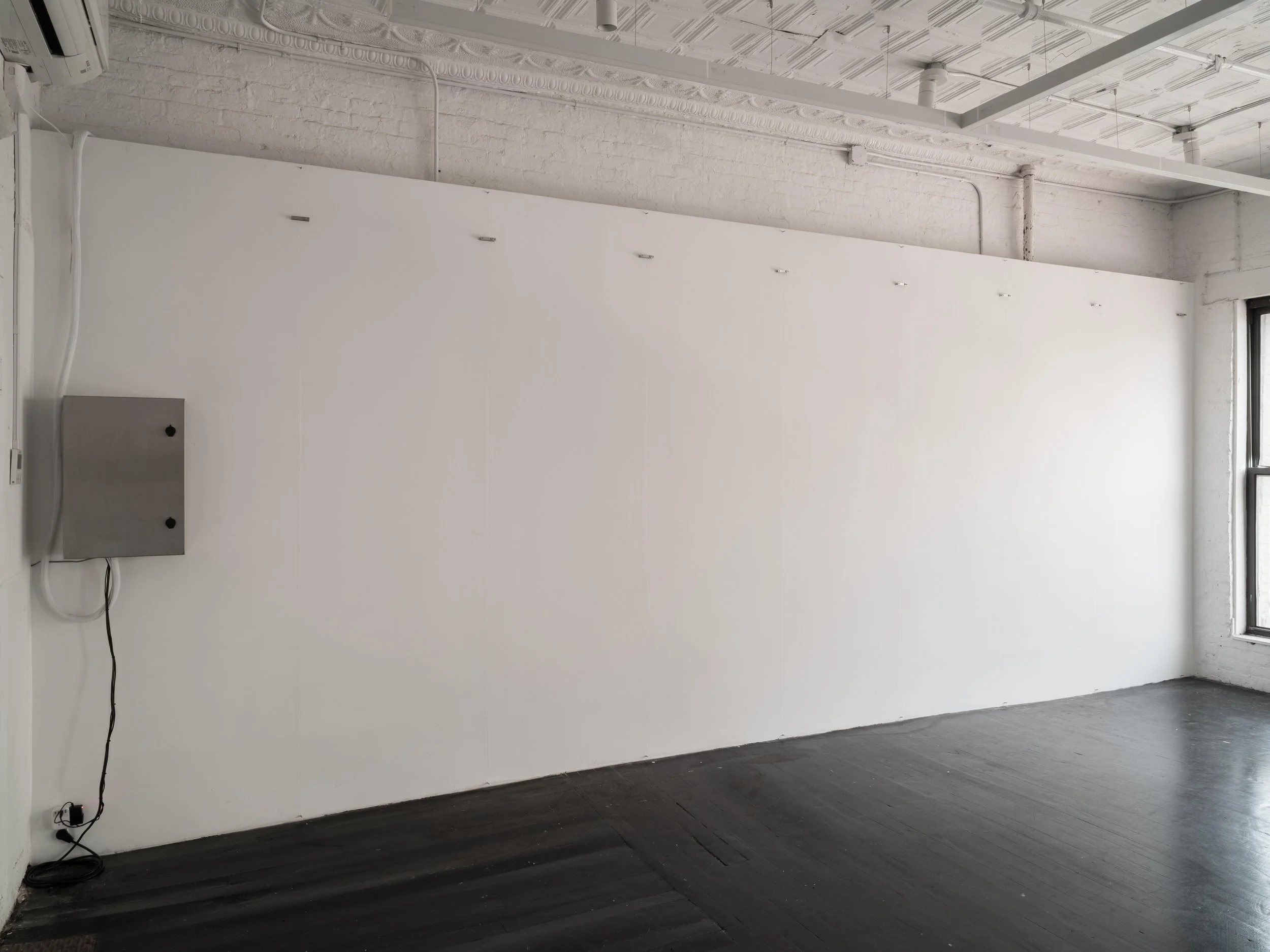
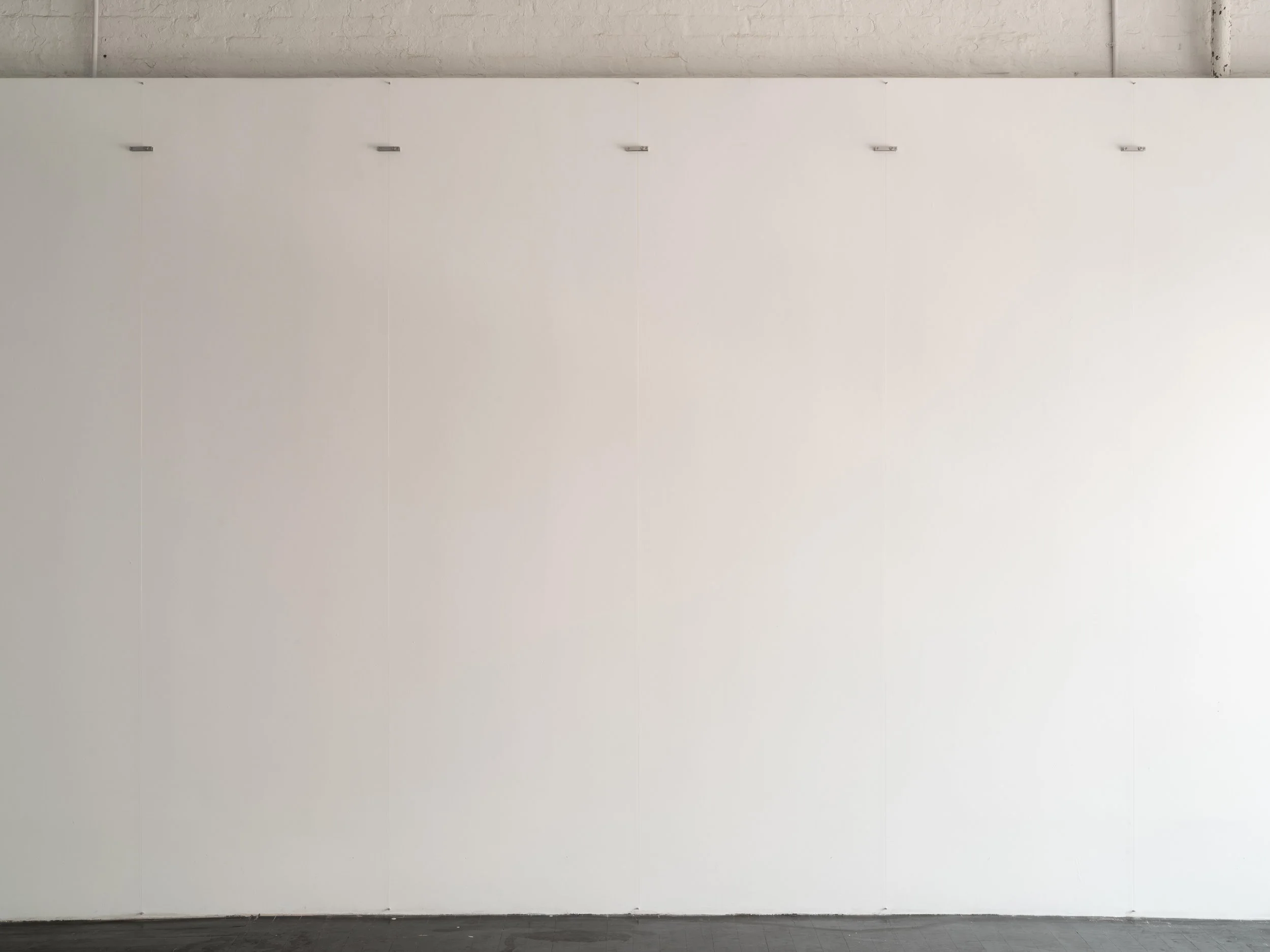
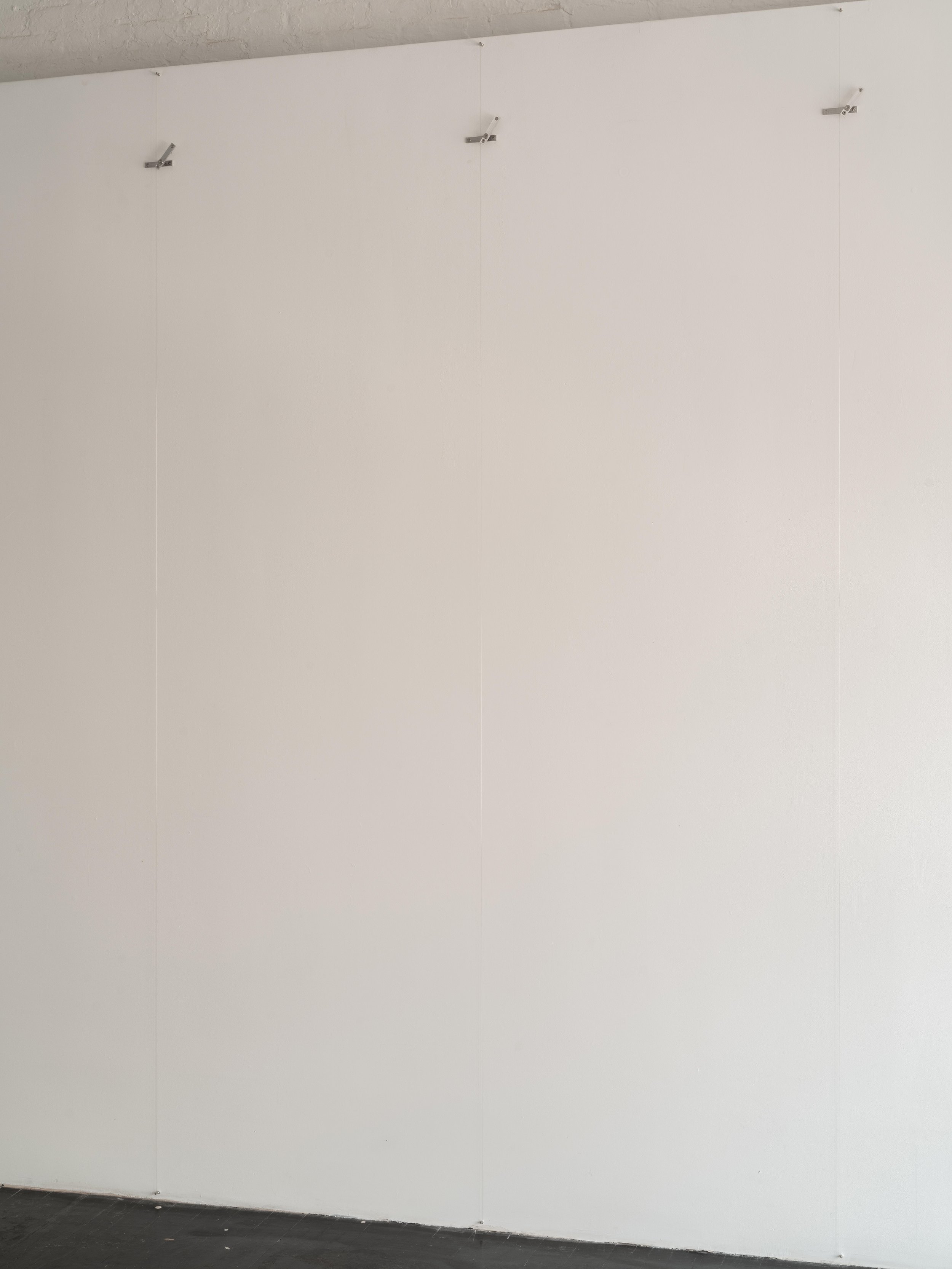
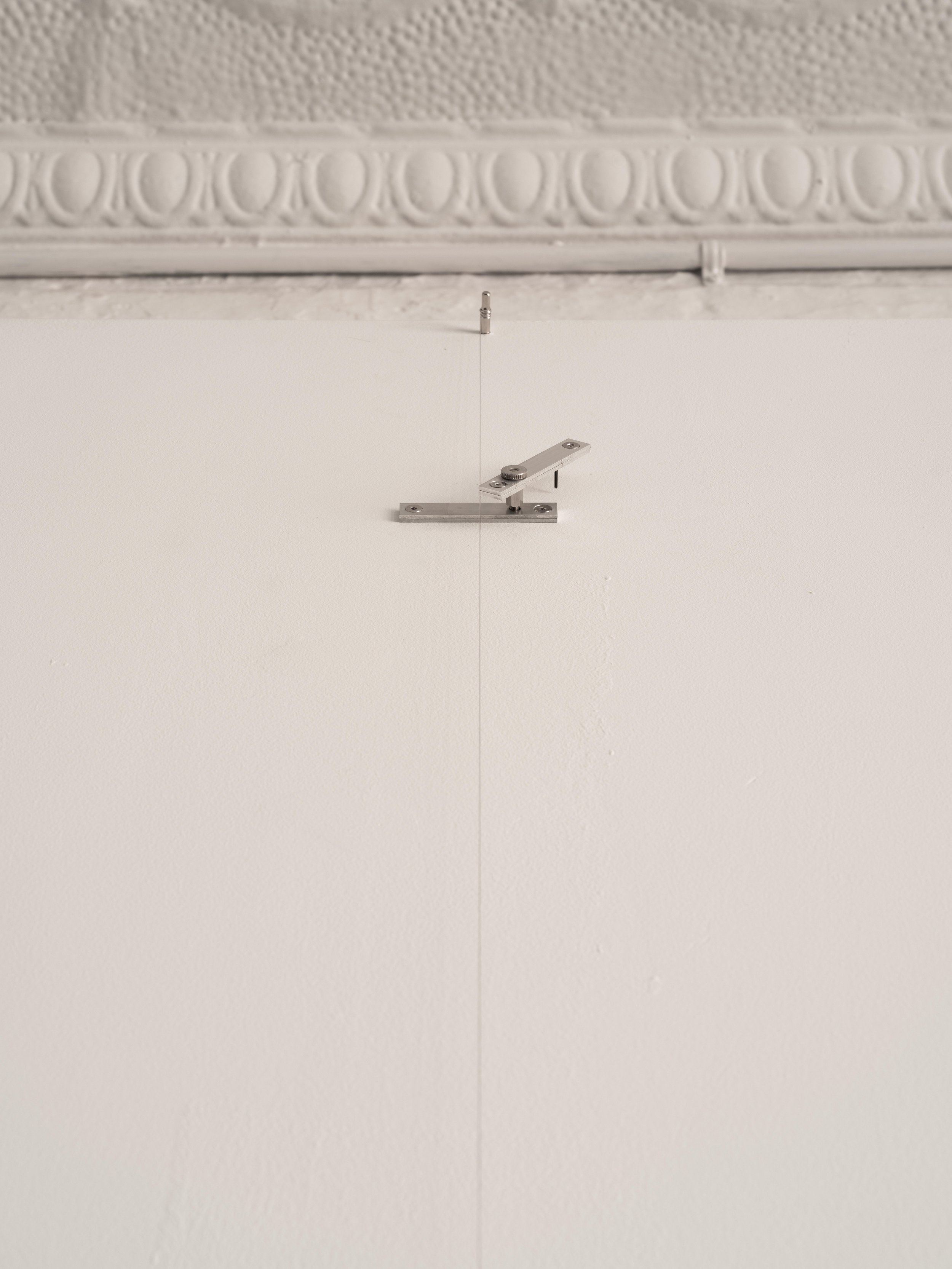
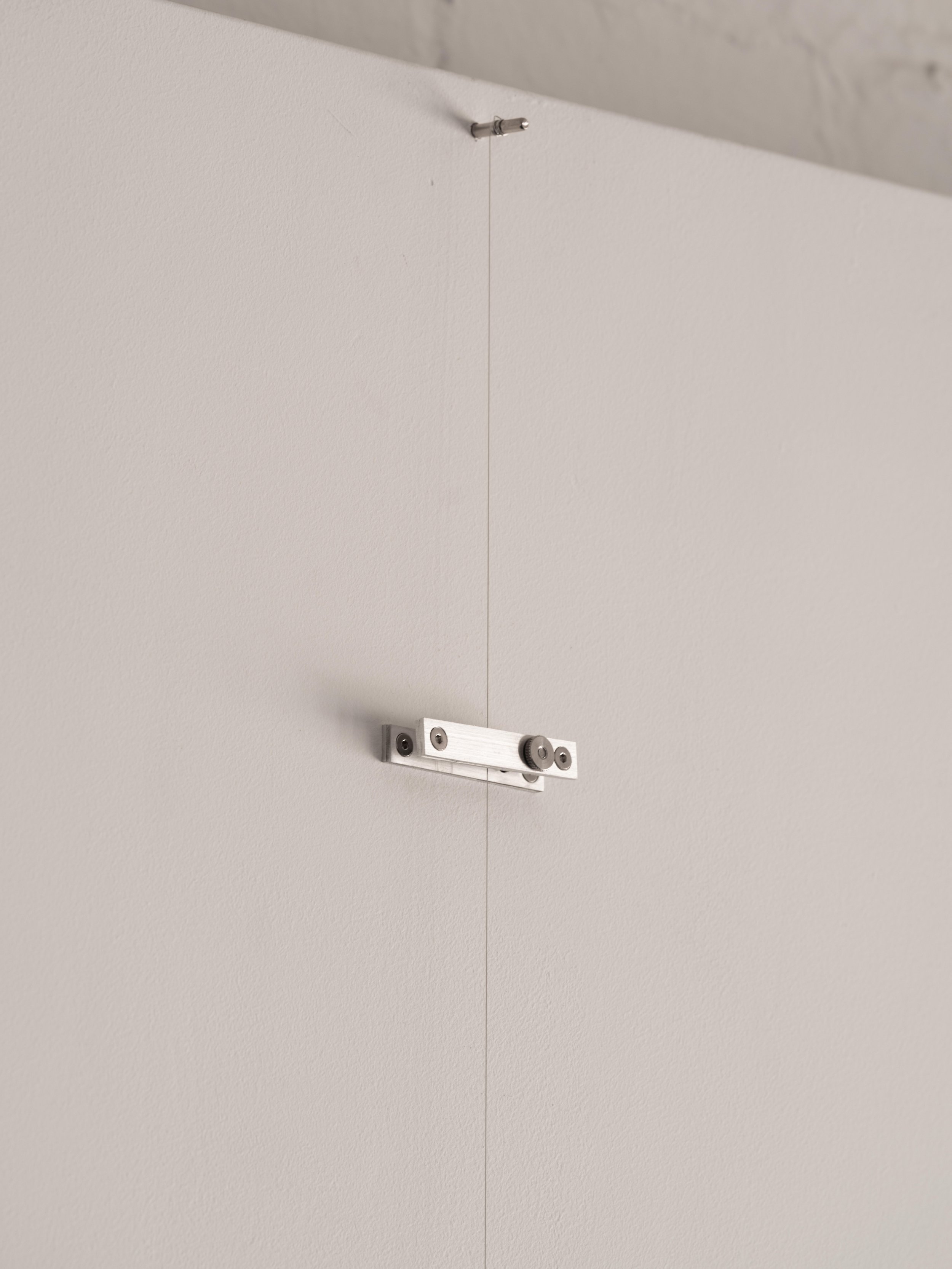
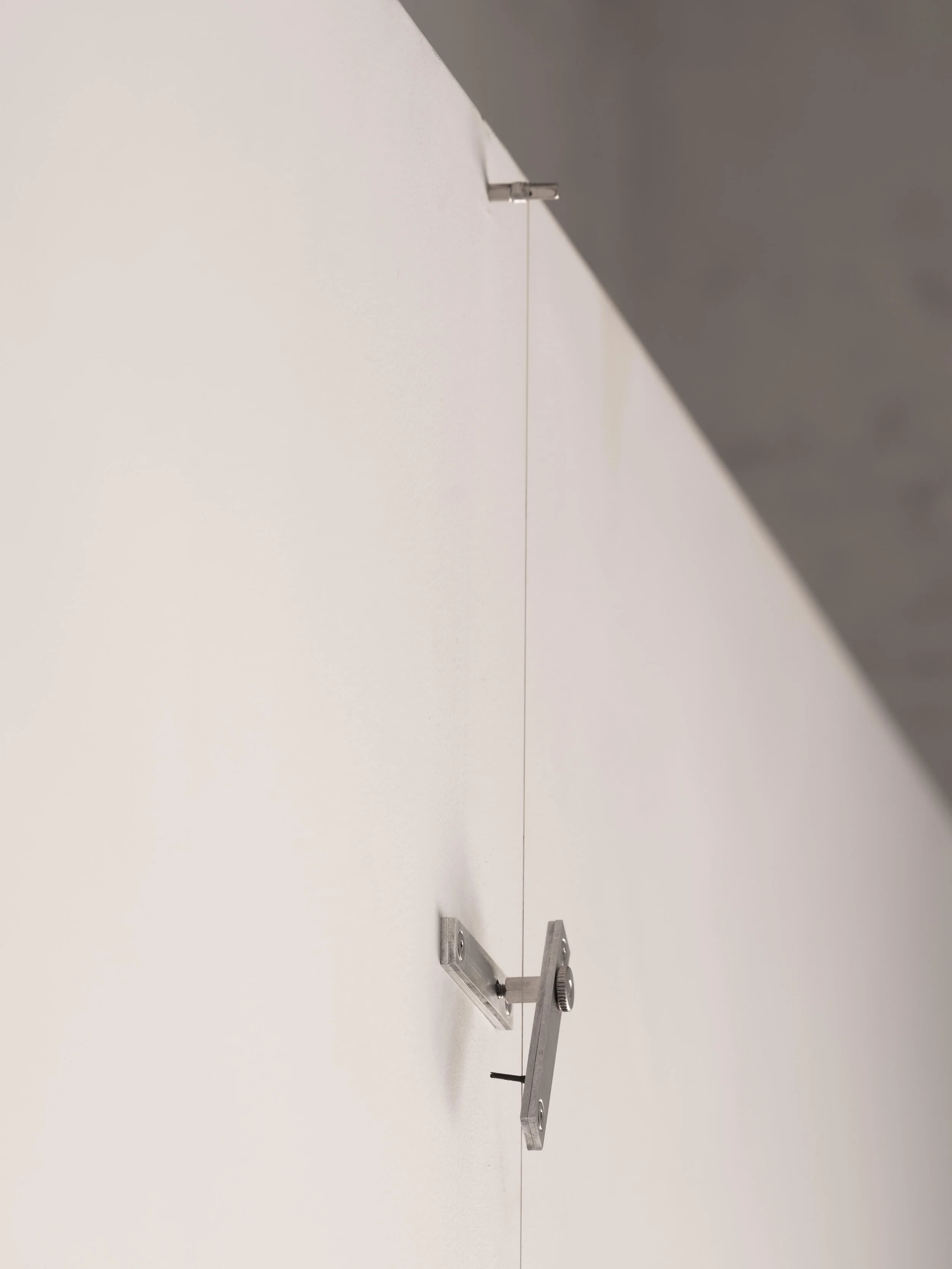
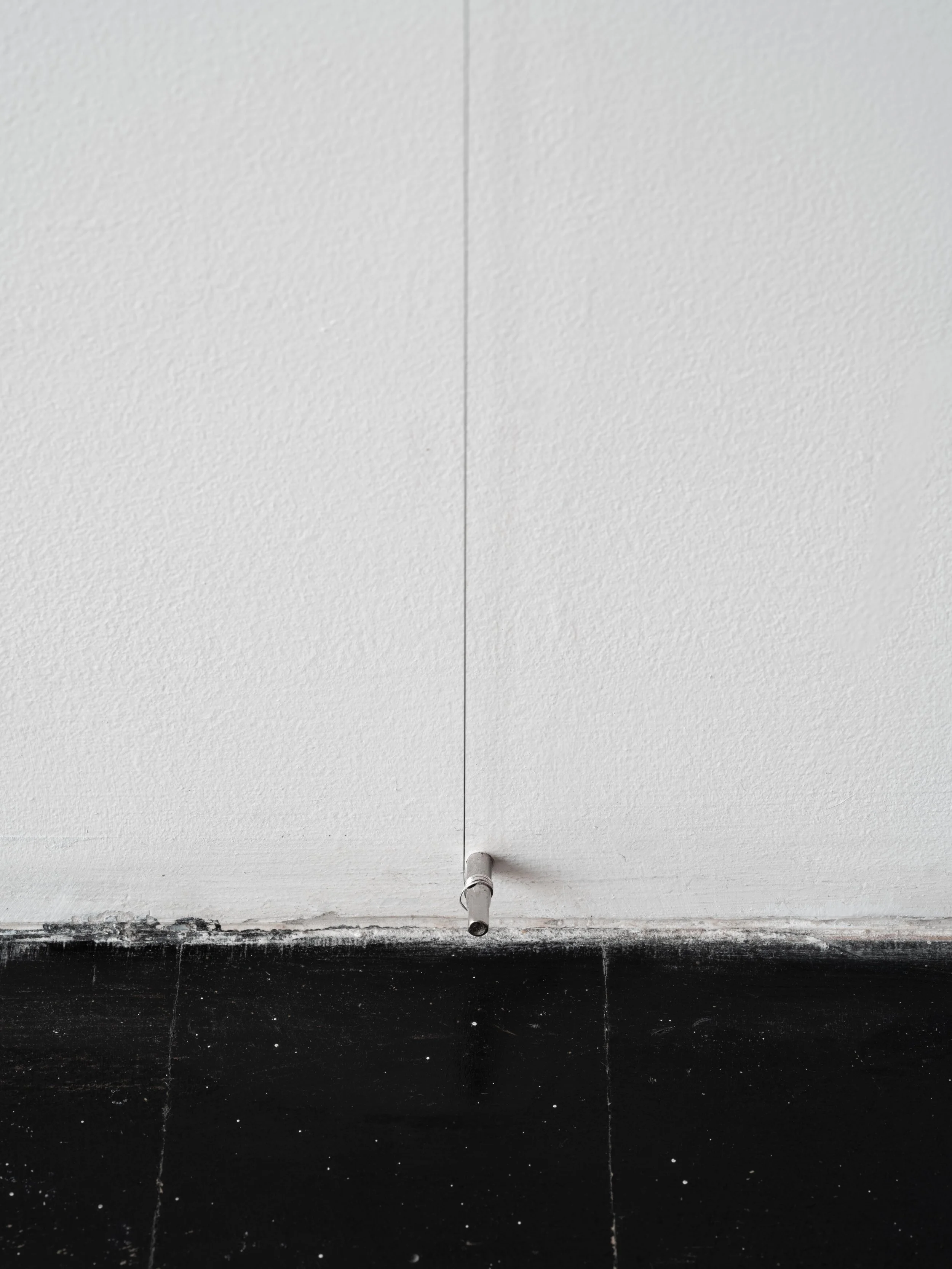
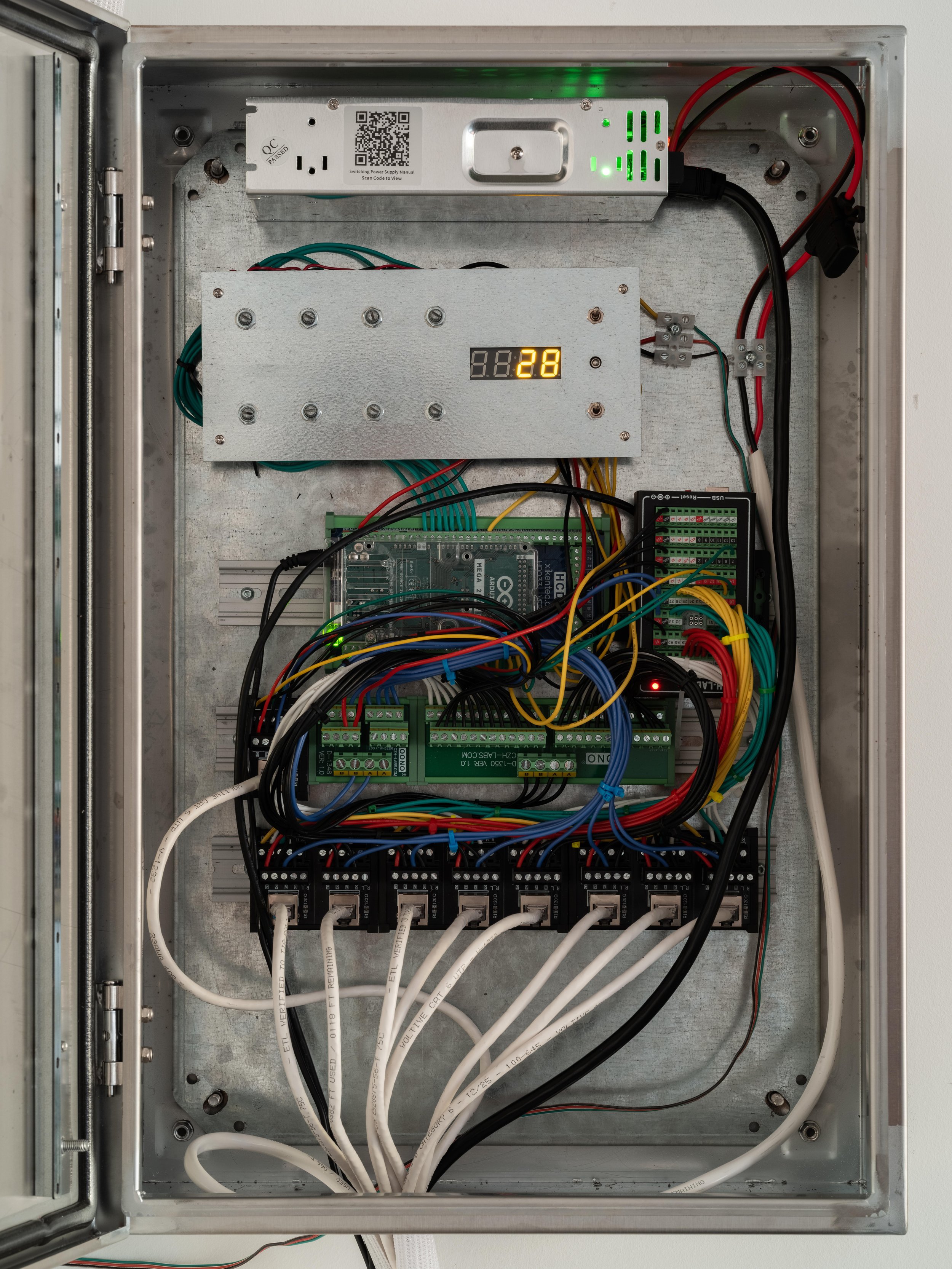
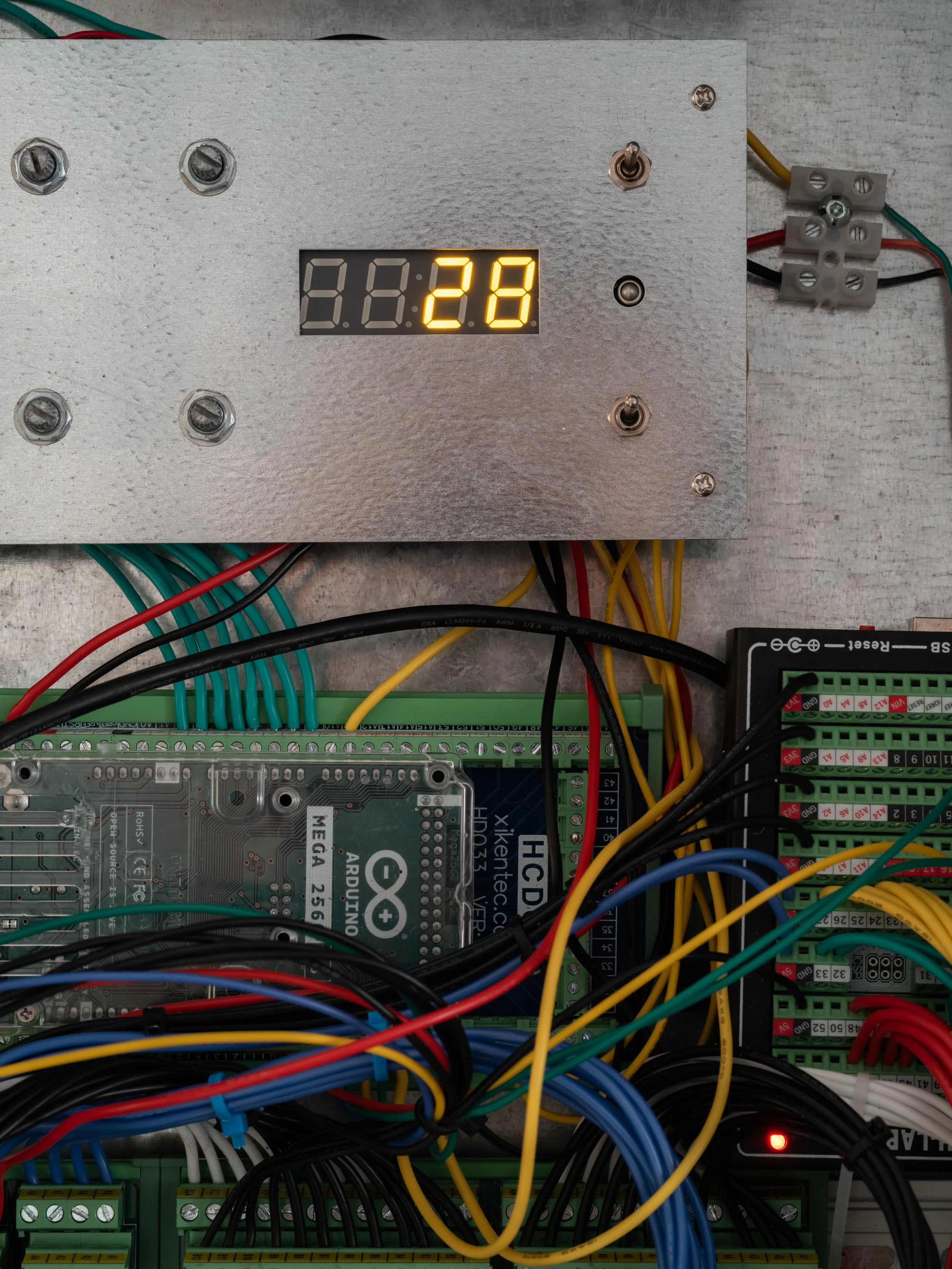
Upon entering the gallery, visitors activate Lucy Lie's installation of sixteen vertically suspended stainless-steel strings mounted along the gallery walls. A sensor triggers synchronized strikes across the strings, which begin the exhibition perfectly tuned within a fixed frequency range. Throughout the exhibition, continual activation by visitors entering and exiting, together with fluctuations in summer humidity and temperature, gradually detunes the strings, causing them to drift increasingly out of harmony. Though activated in discrete, synchronous events, each strike contributes to a composition that unfolds over the course of the exhibition, accumulating through the collective presence of its visitors. Its duration cannot be directly experienced, only inferred through the subtle traces of change that gather over time. No individual can fully perceive the work's gradual fluttering transformations or their own role in shaping it.
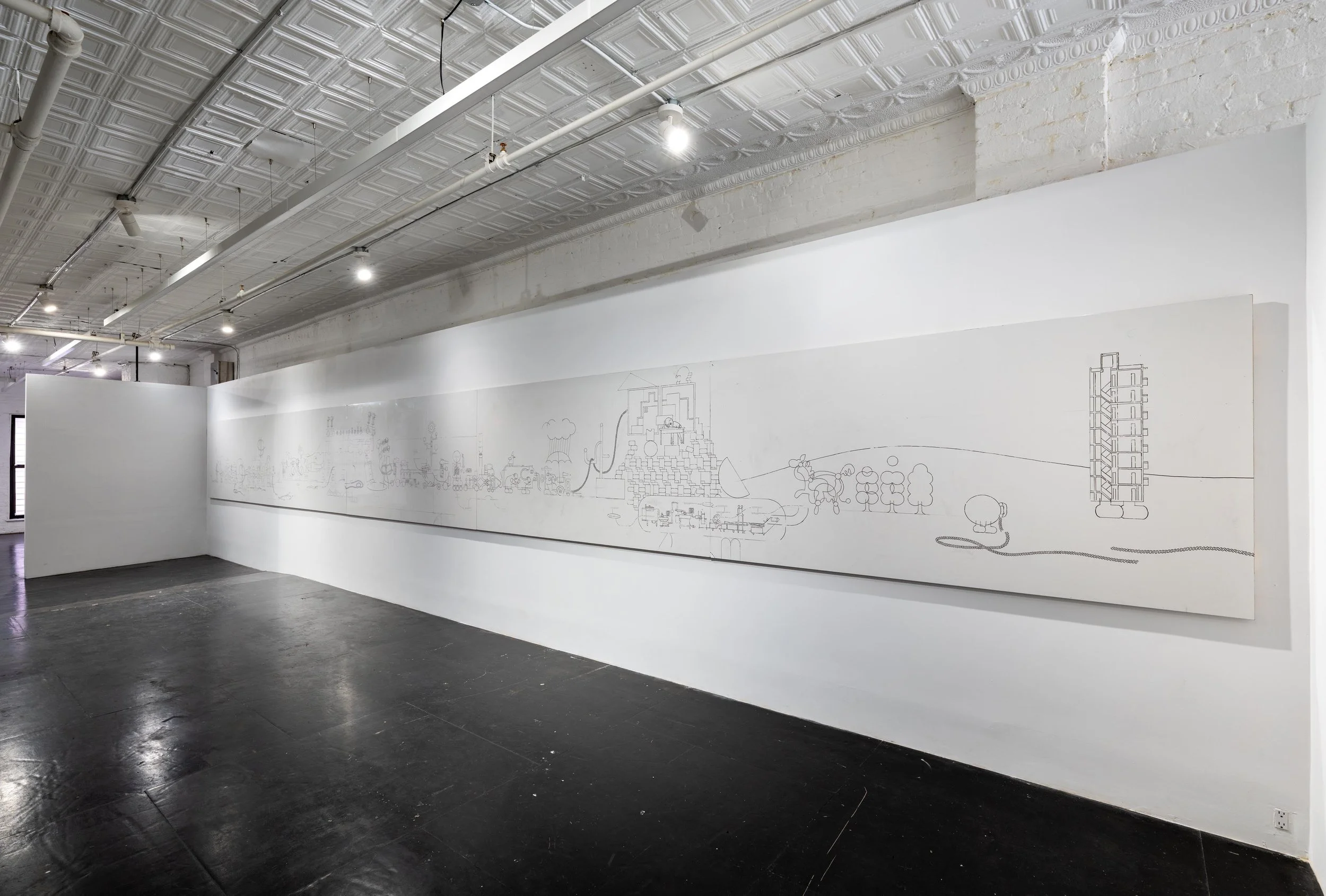
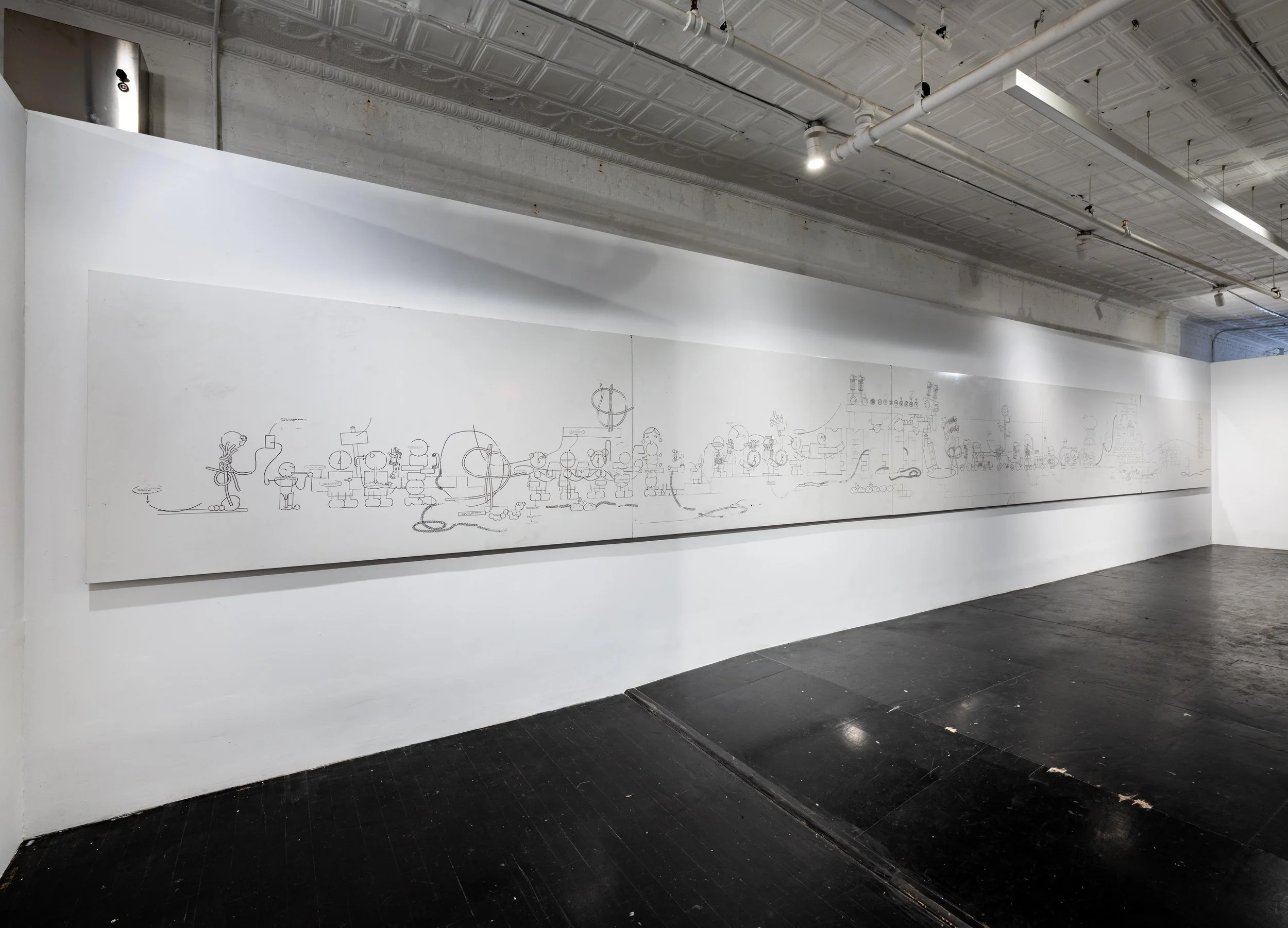
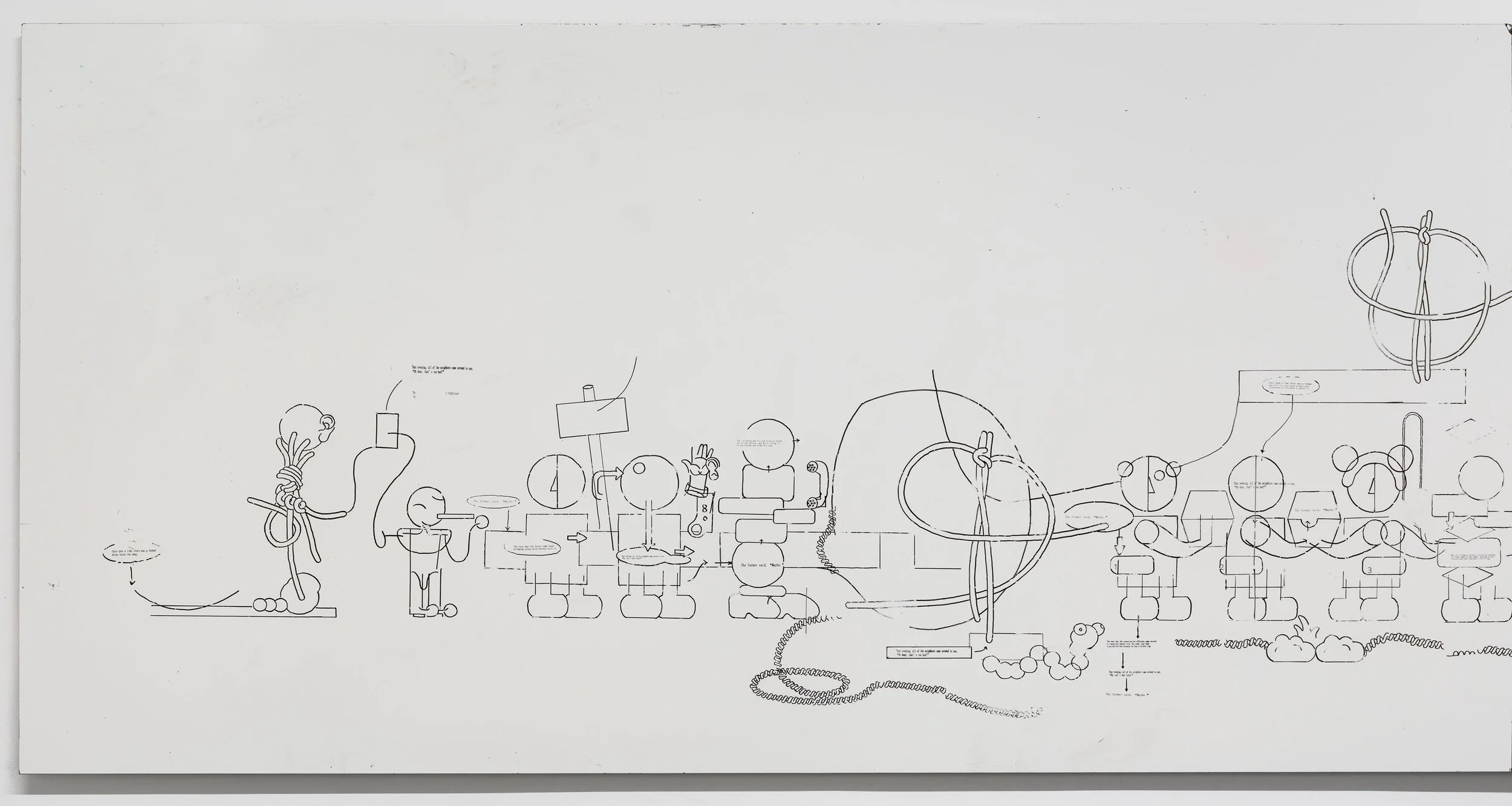
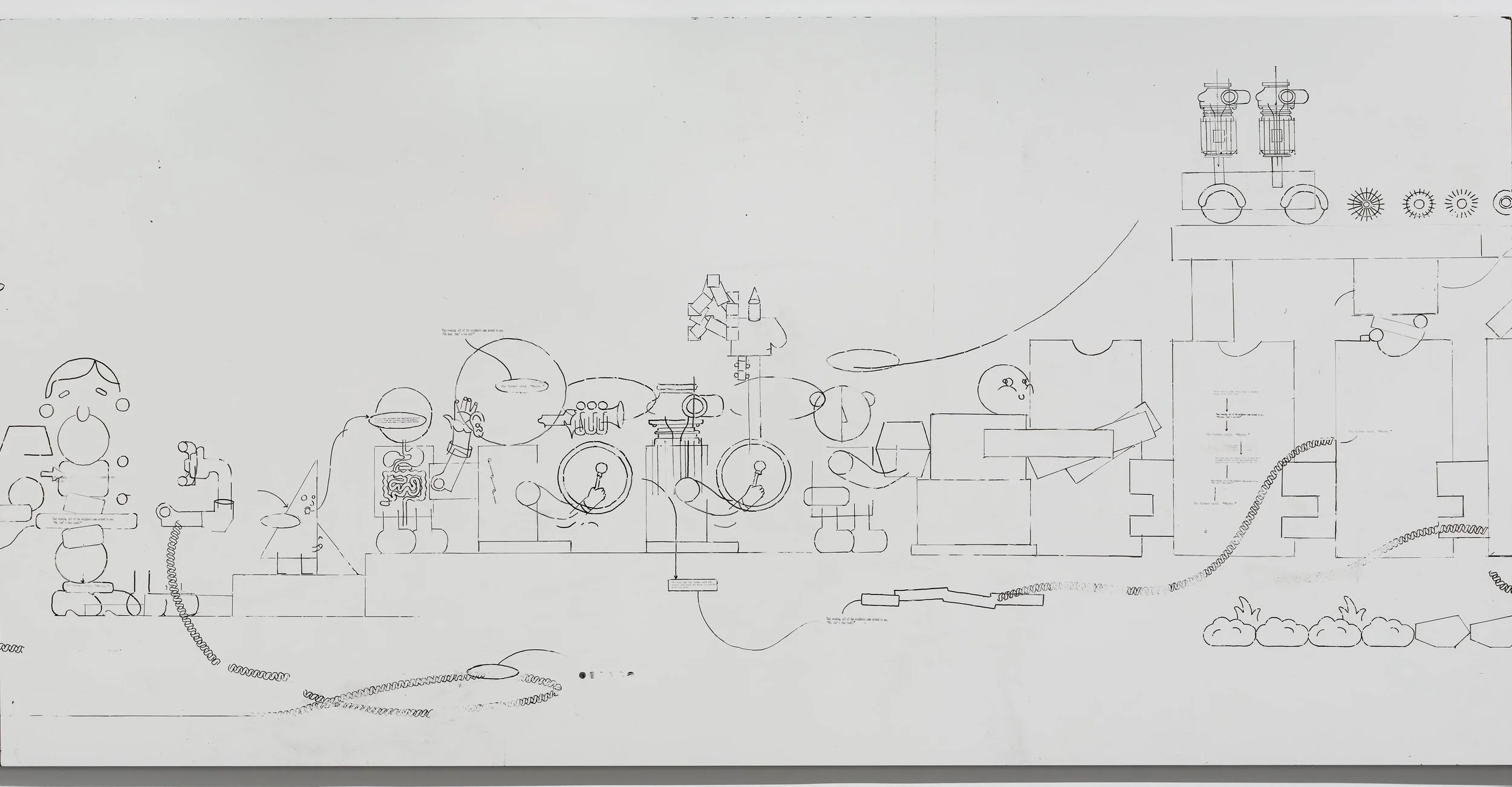
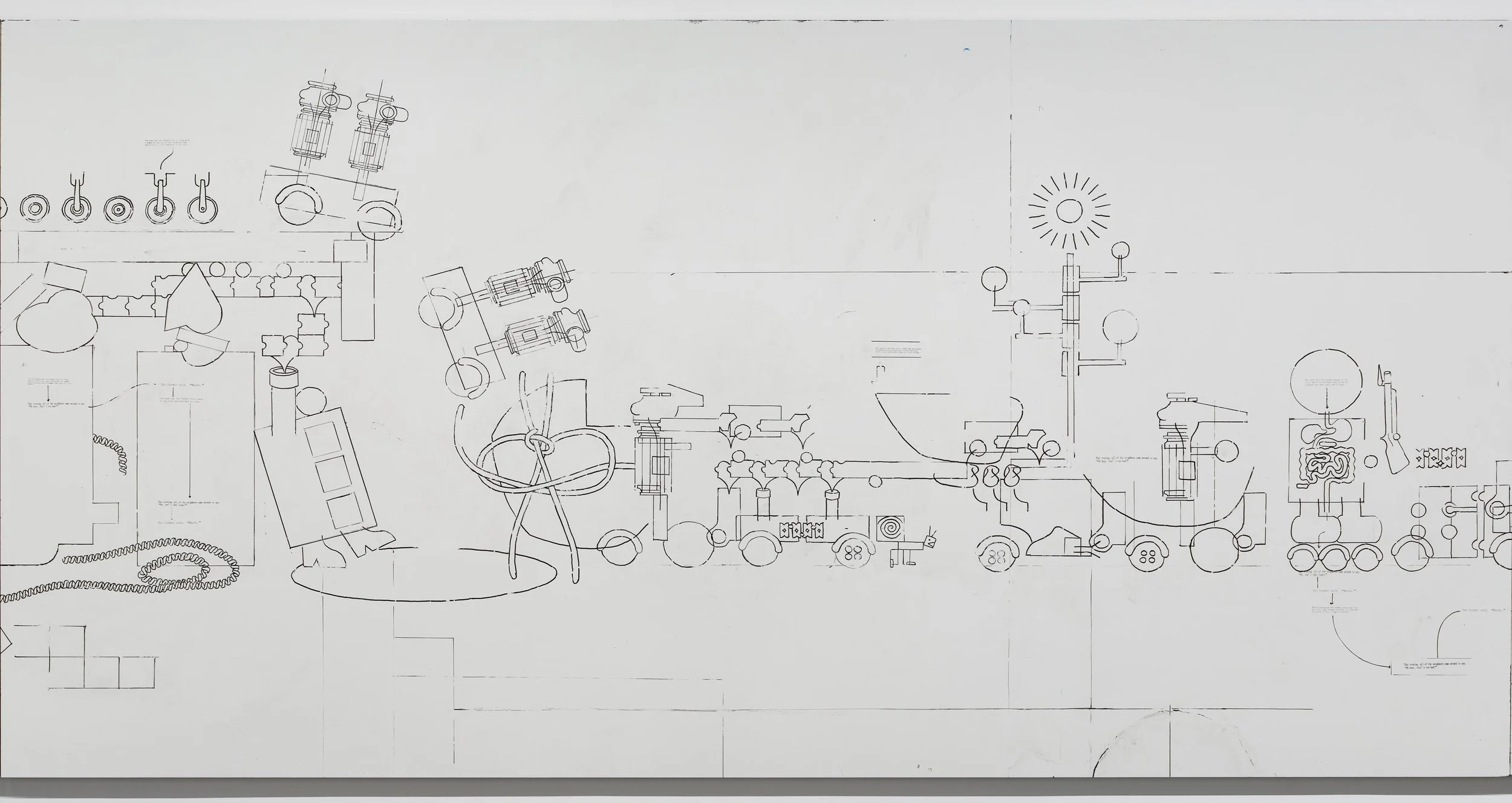
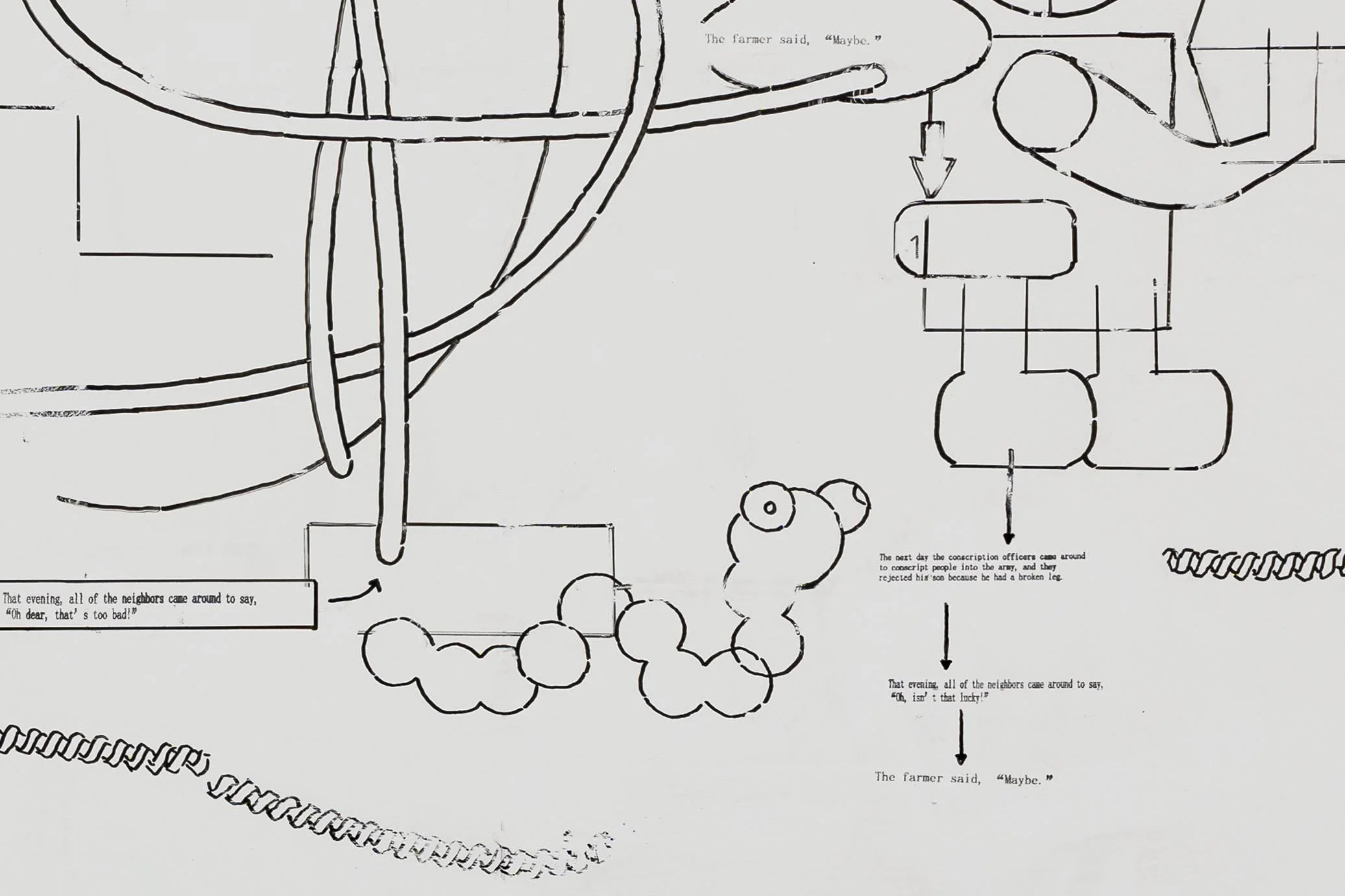
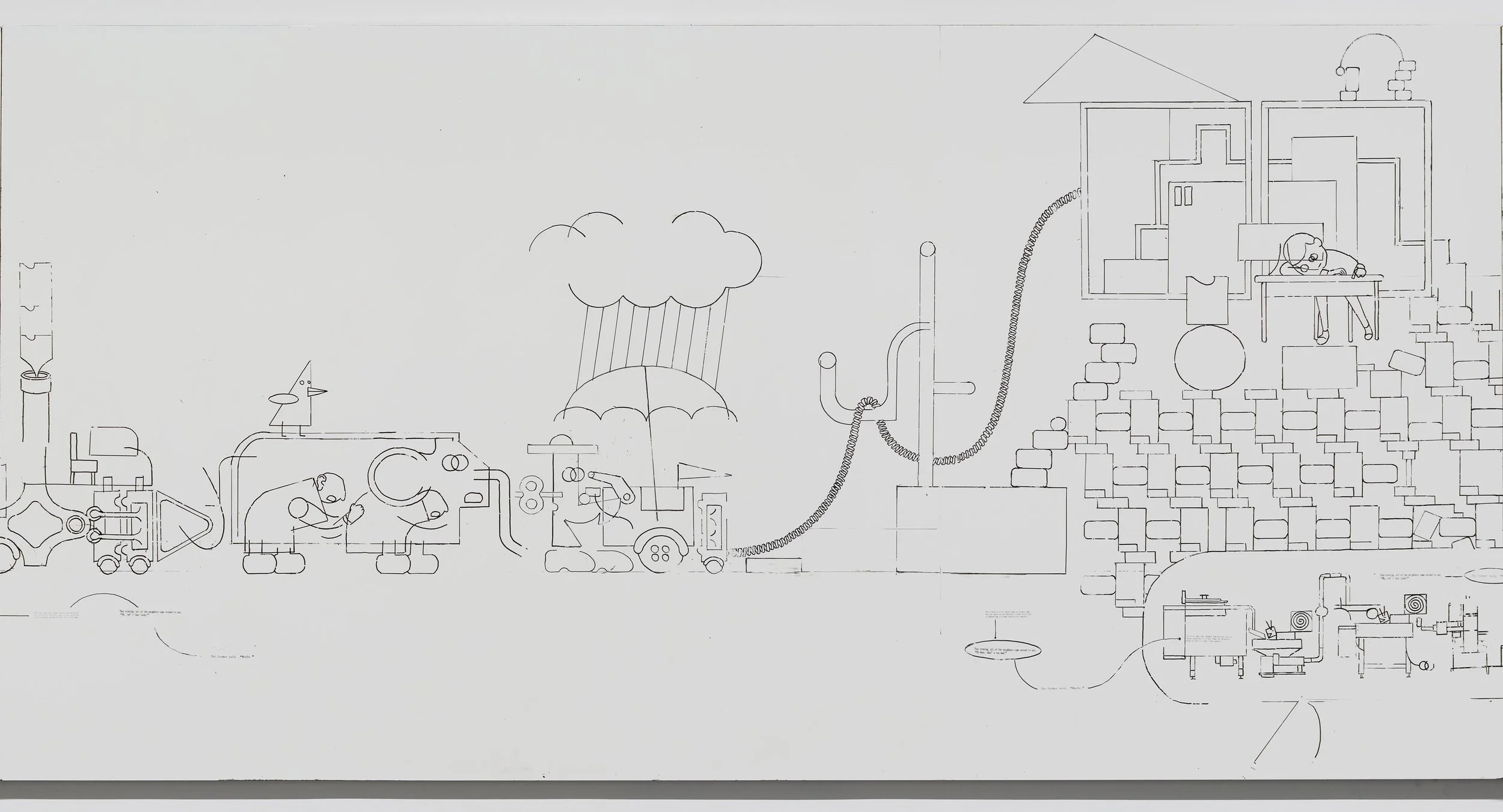
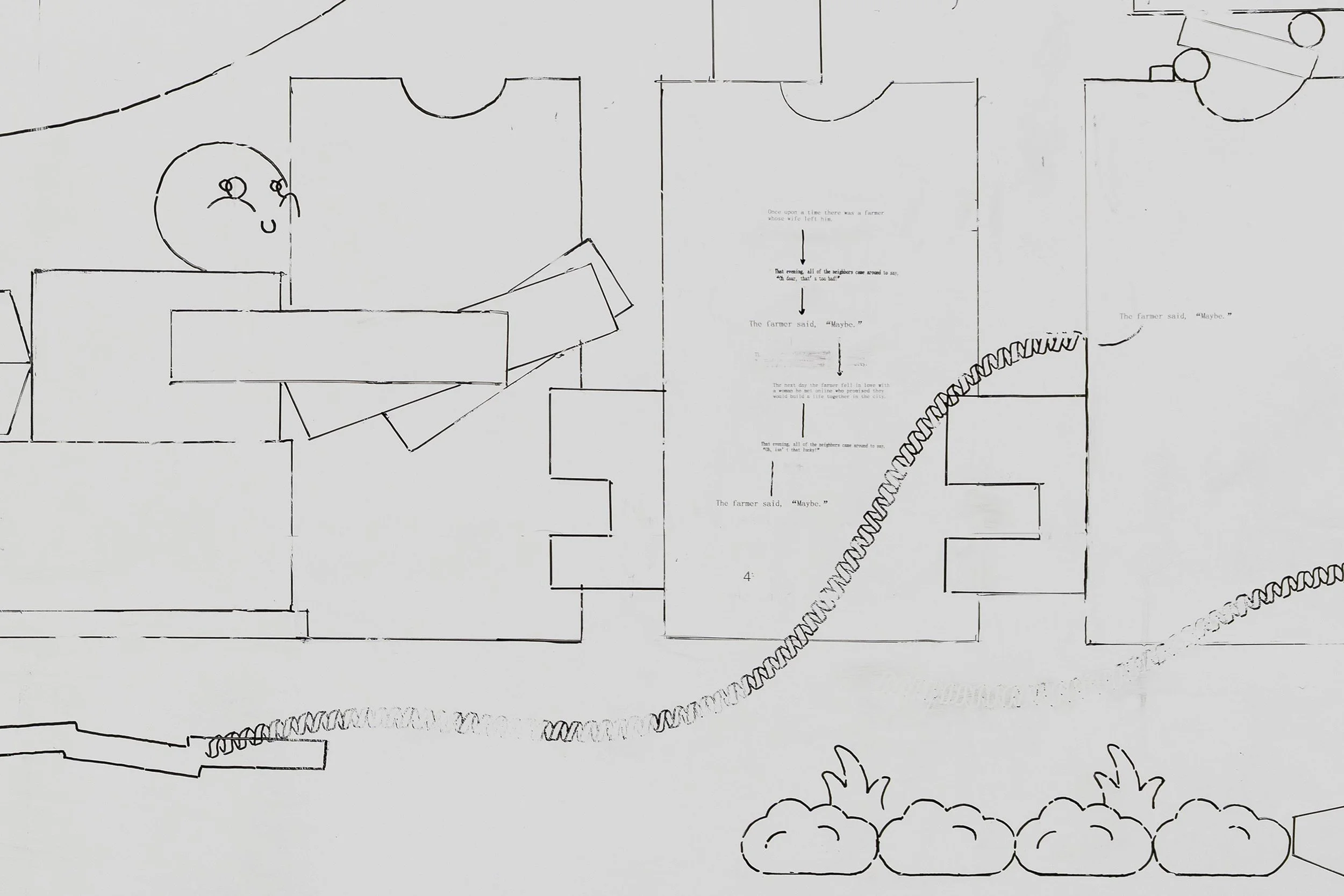
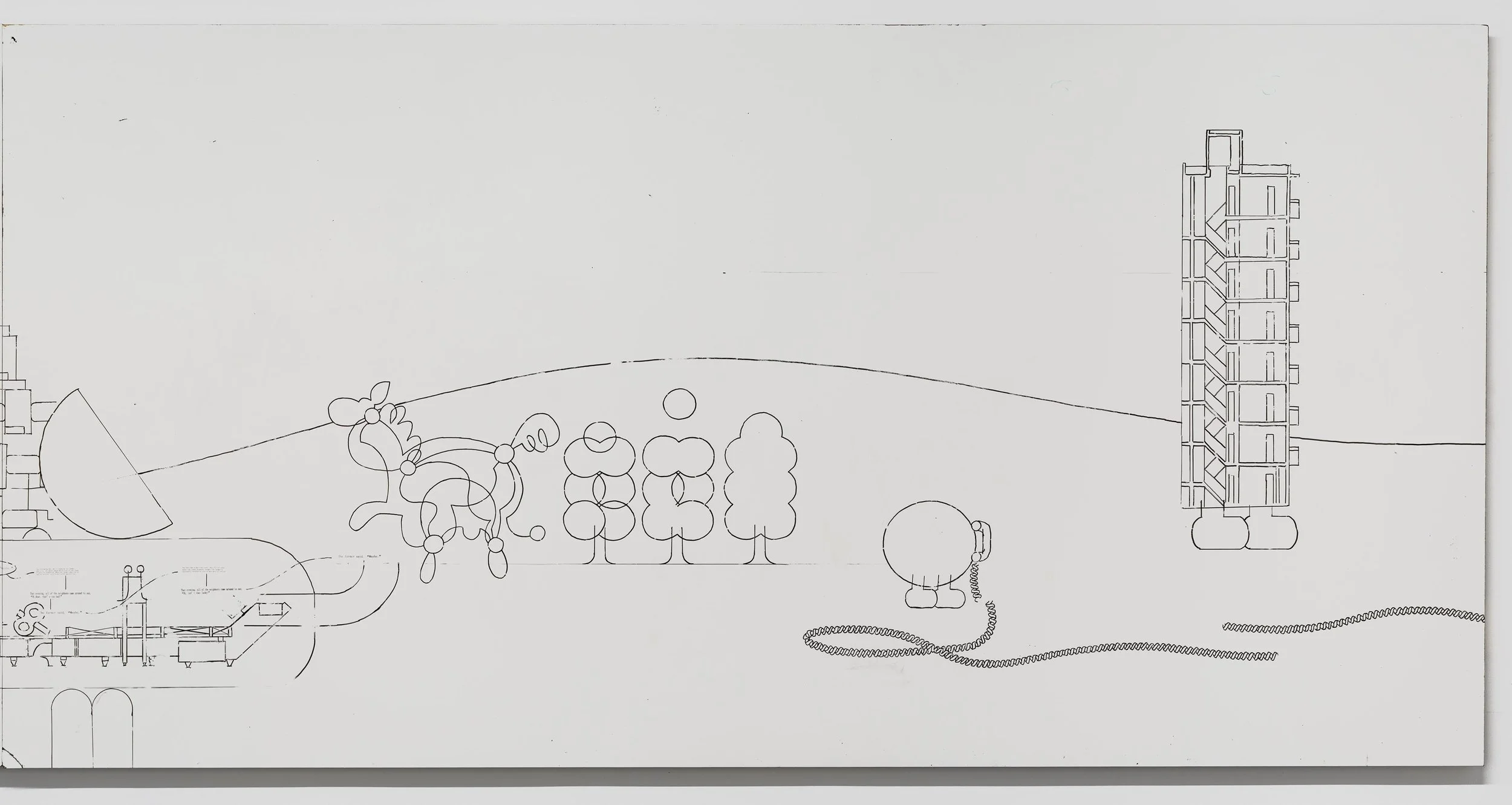
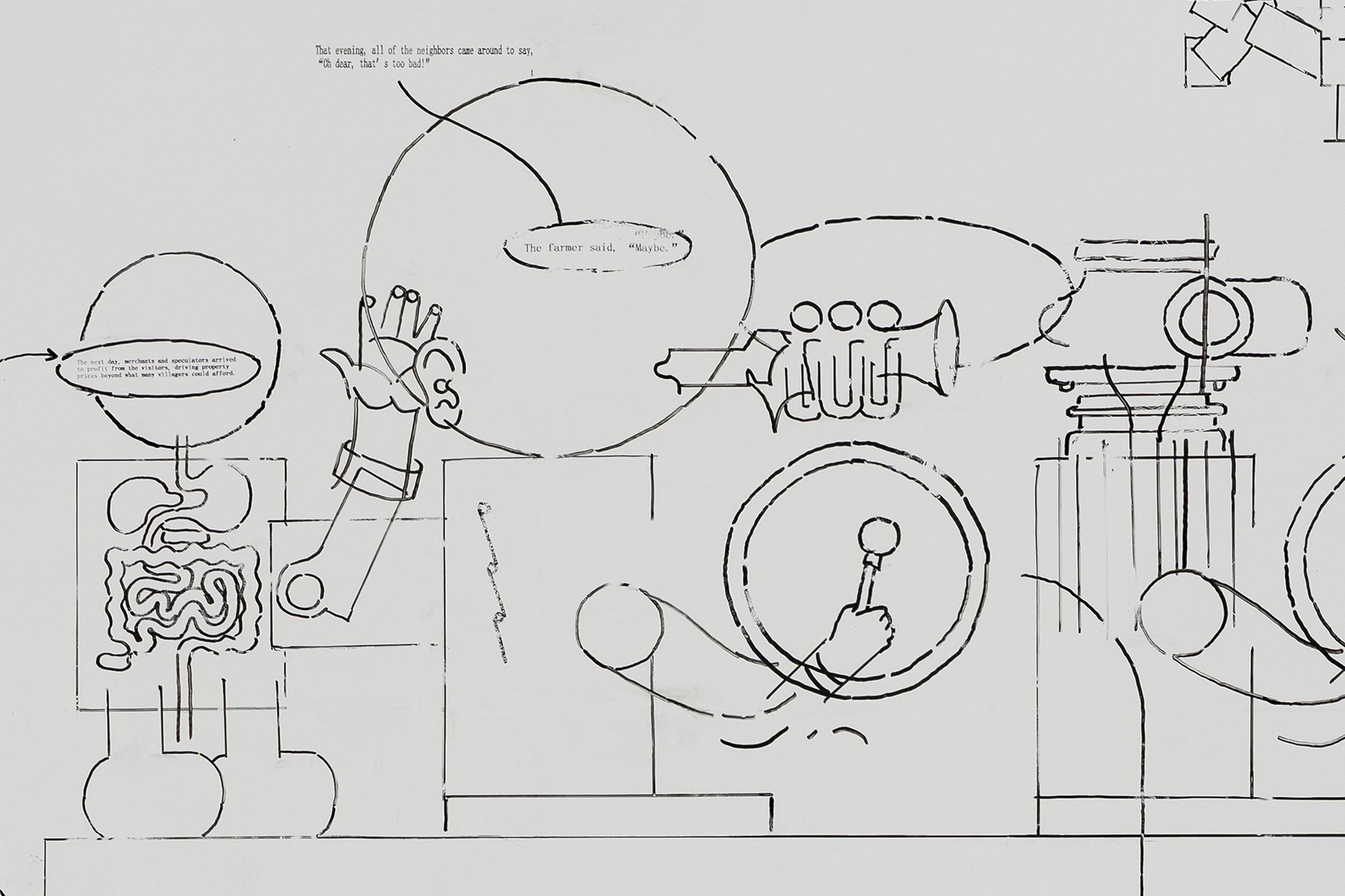
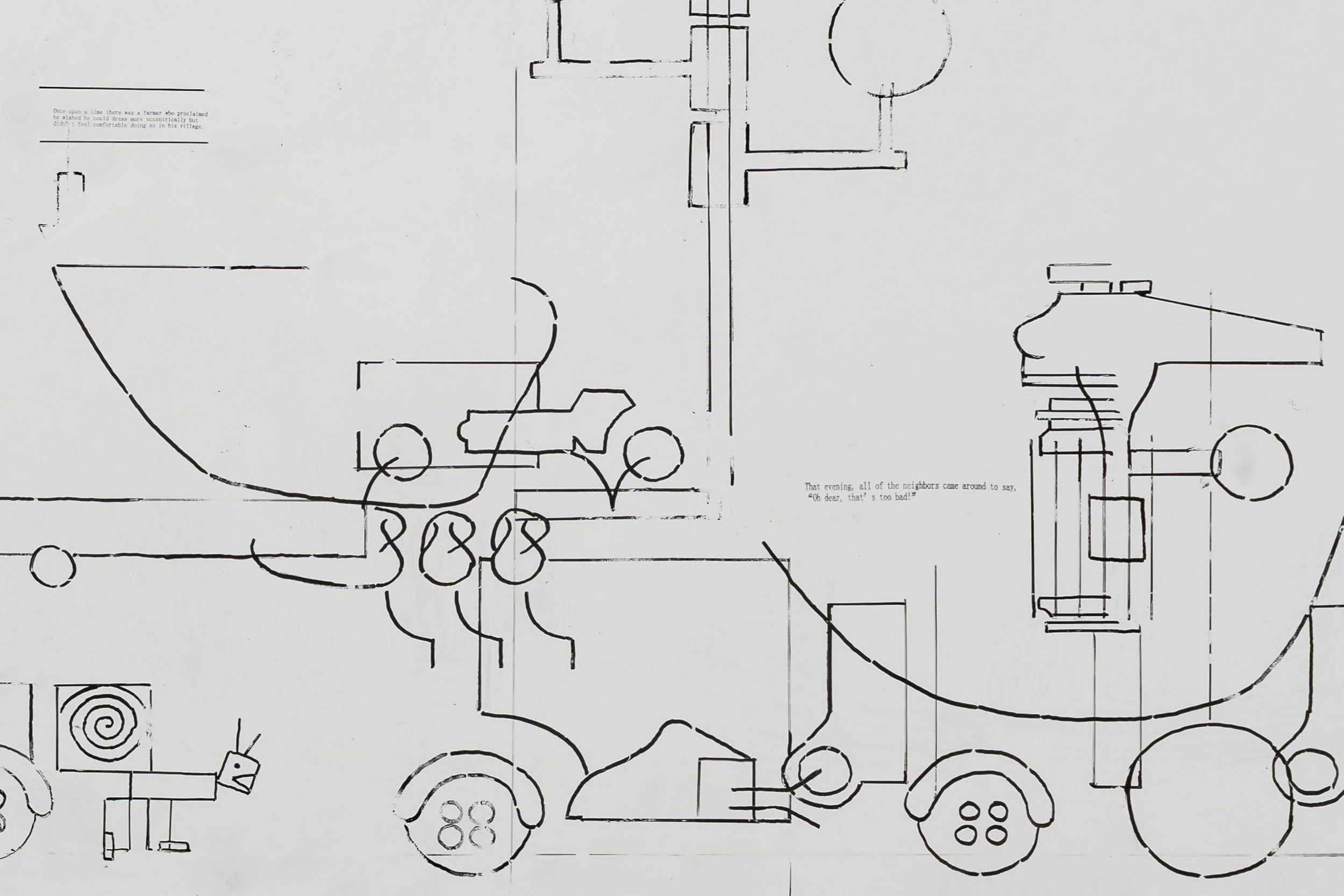
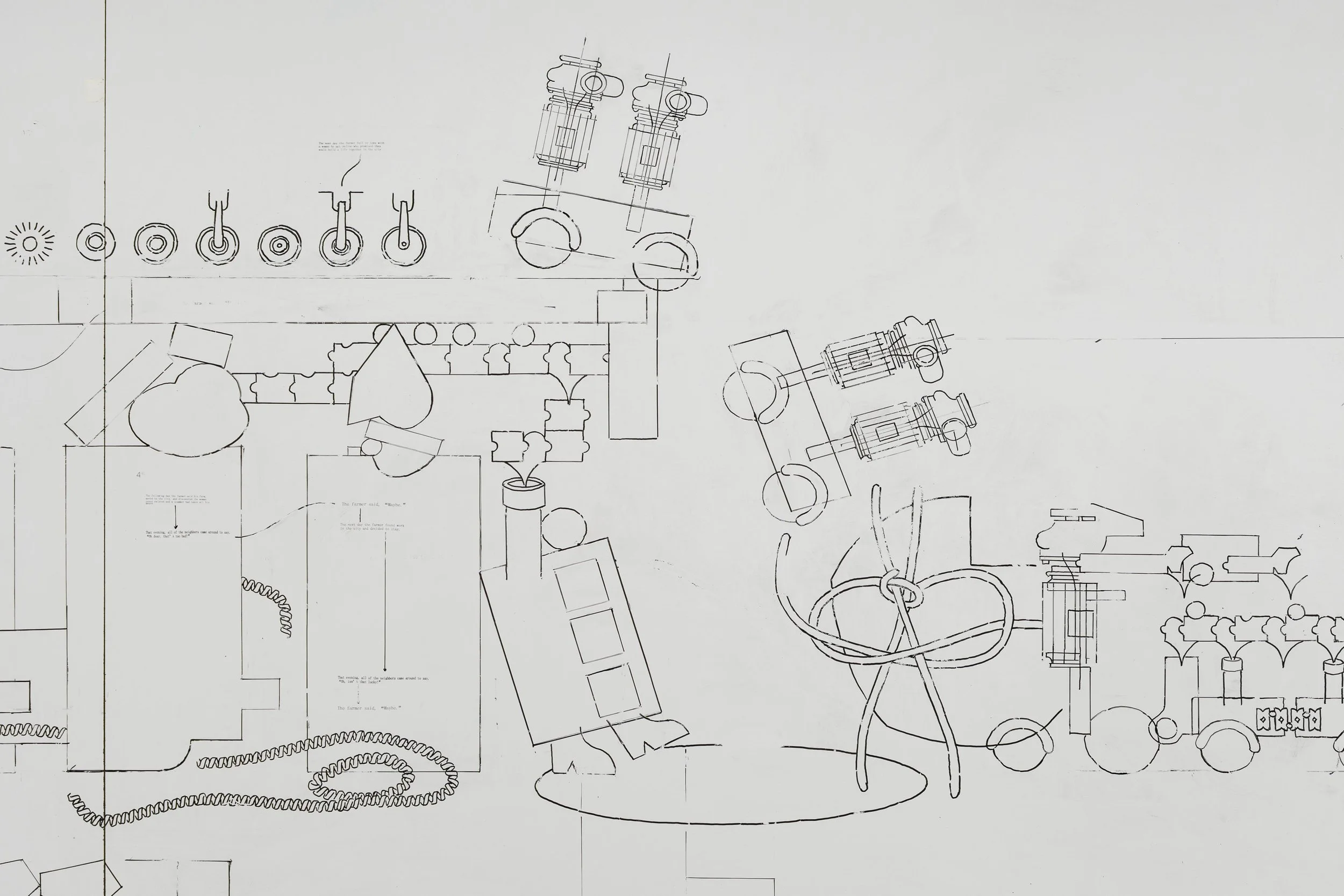
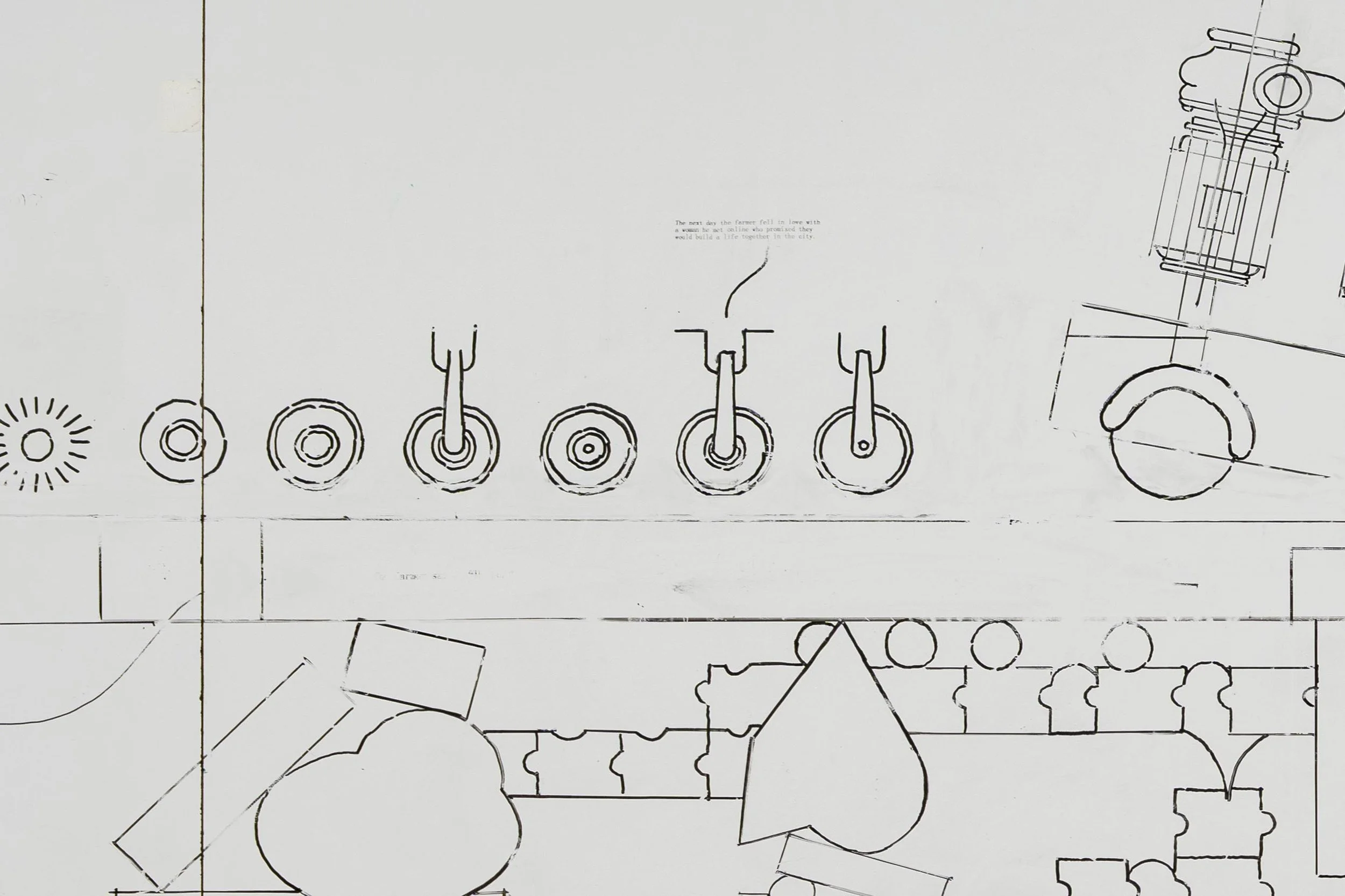
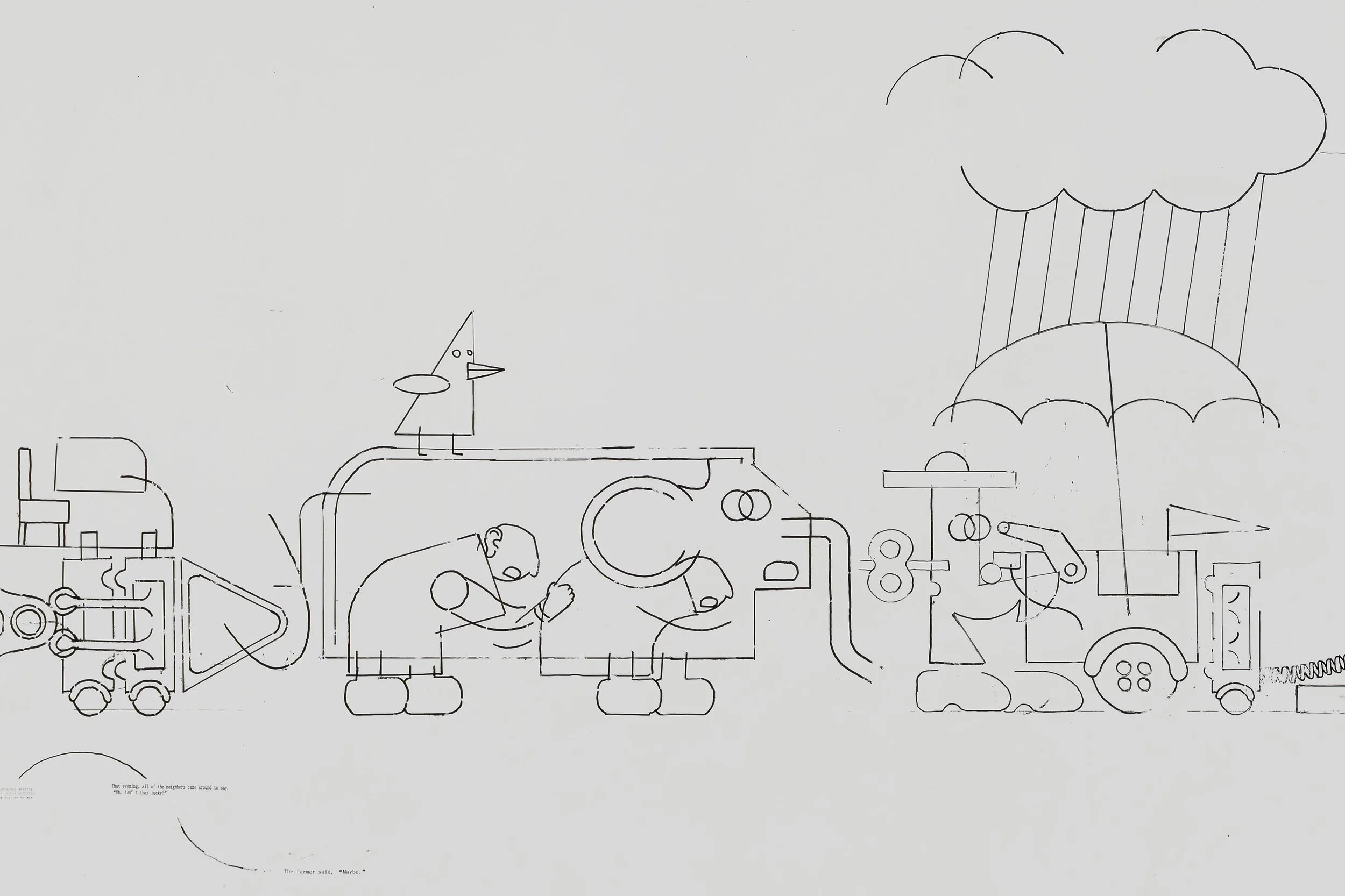
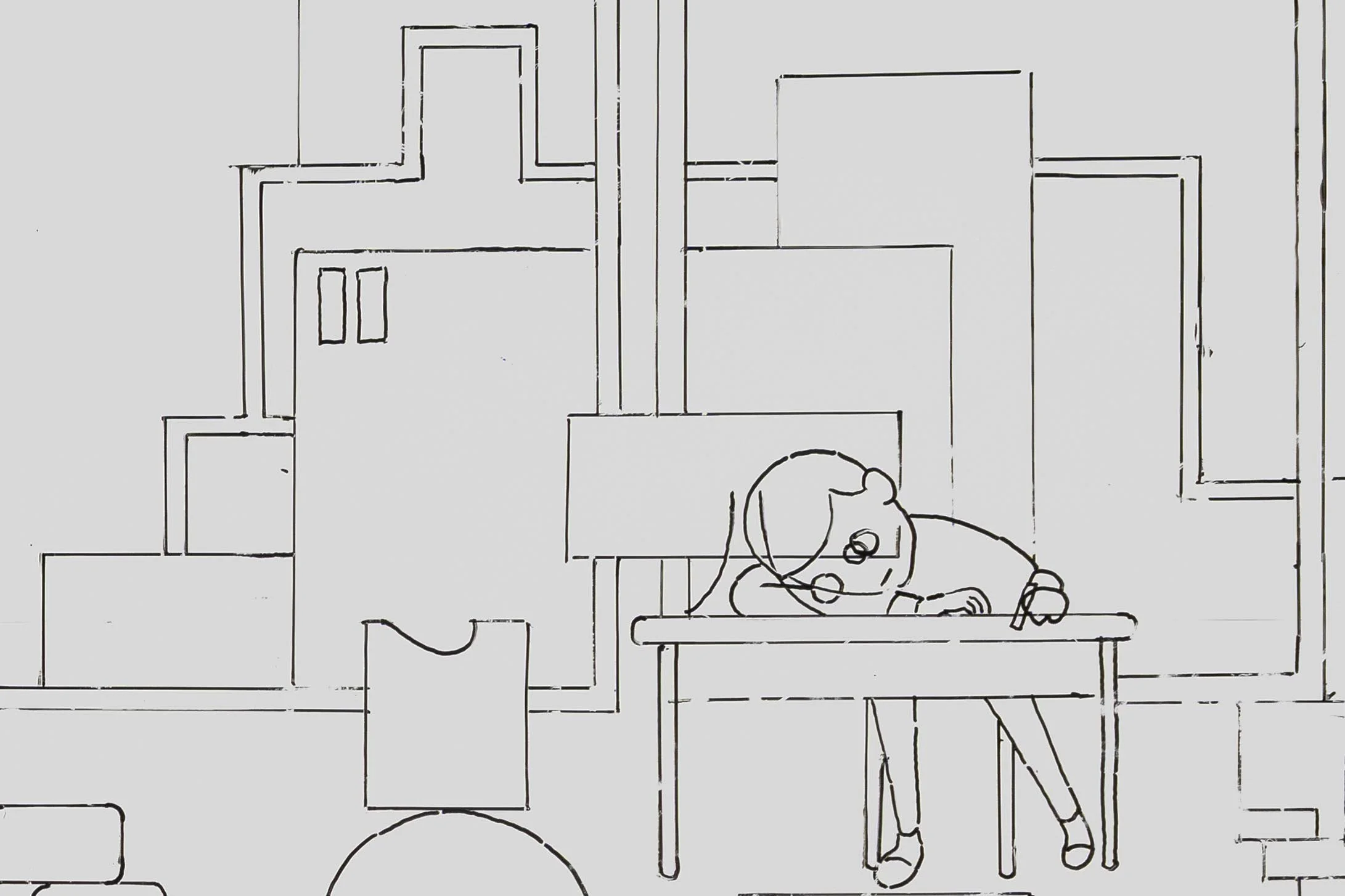
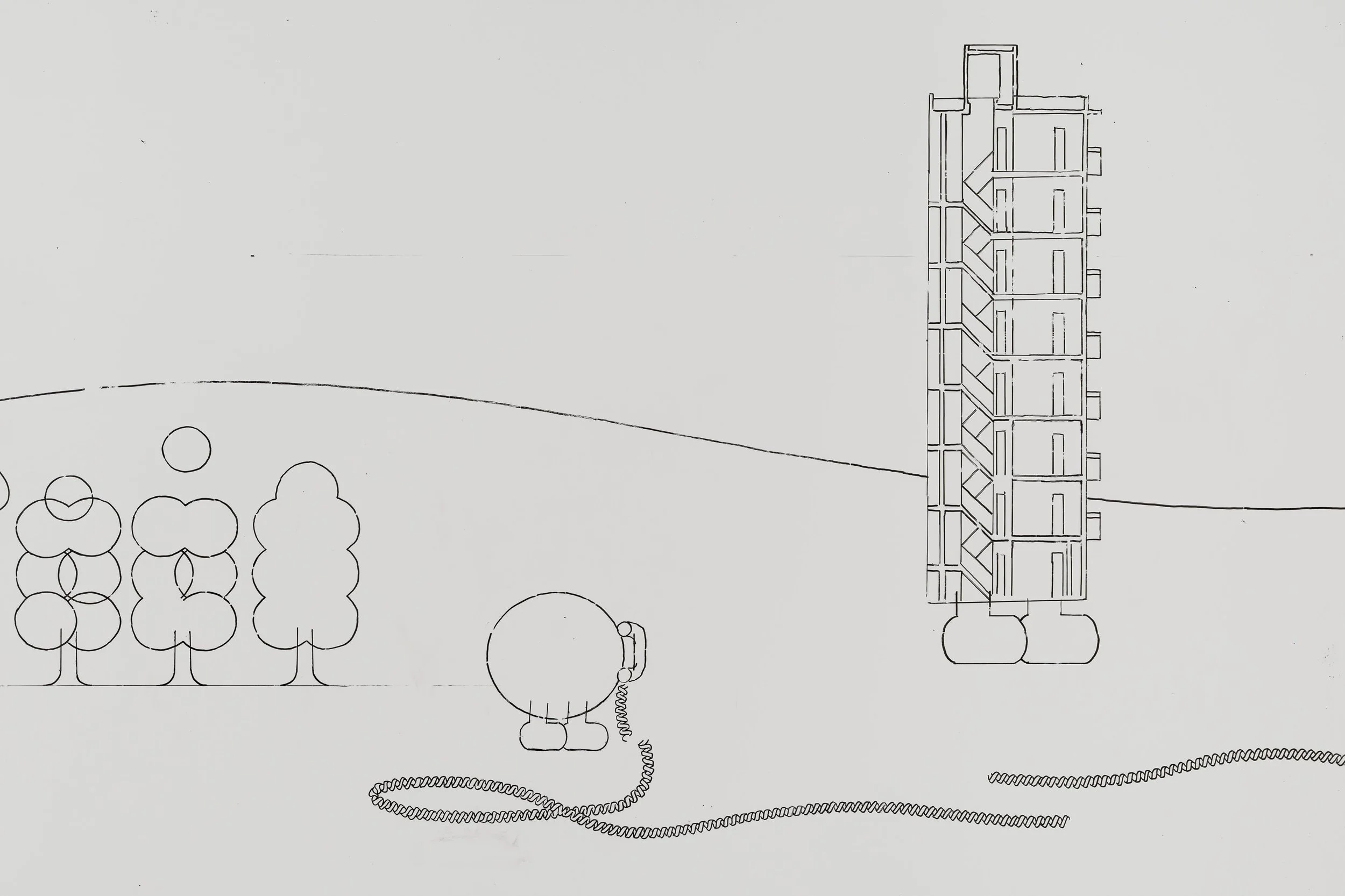
Thomas Laprade's panoramic drawing similarly inhabits the space between determination and speculation. Generated in Rhino, a software environment developed for architectural and industrial modeling, the composition is transferred by hand onto dry erase boards using erasable marker. The resulting forms evoke decision trees, dialogue diagrams, flow charts, technical schematics, and architectural plans. The types of visual languages that display organized possibilities before they become reality, depicted in cartoon-like figures that recall instructional graphics or friendly branded faces of multi-nationals. Rather than resolving uncertainty, however, the drawing proliferates into disjointed, competing narratives. Like the software from which it originates, and like the erasable surface on which it is drawn, the work remains perpetually provisional, existing as a model for revision rather than a finished object. Obsolete telephone cords weave through the composition like broken relay batons in a race, passed from one worker to the next in an endless choreography of communication, labor, and deferred completion, suggesting a form of progress that continually postpones its own arrival. Technical systems, speculative pathways, and playful figuration coexist without collapsing into a singular narrative.
Across both installations, counting, gradual detuning, and diagramming become ways of organizing an immeasurably complex world without ever exhausting it. Narrative emerges not through singular events but through repetition, drift, accumulation, and innumerable tiny deviations that no individual observer can fully reconstruct. Rather than presenting absolute narratives, I Counted to 100,000 proposes that meaning remains collectively produced, temporally distributed, and inseparable from the noise generated by the very systems that seek to produce certainty.
Bios: Since 2010, Lucy Lie has performed in basements, punk spaces, DIY venues, clubs, and various institutions across North America and Europe. Her musical compositions have been presented at MoMA PS1, The Kitchen, Non-Event, and PAGEANT. She also organizes exhibitions in her apartment gallery, B11G. Lucy holds a BFA from the Rhode Island School of Design and an MFA from the Milton Avery Graduate School of the Arts at Bard College.
Thomas Laprade (b. 1991) is an artist, writer, and "cultural producer" who studied painting at the Rhode Island School of Design. He is a co-founder and the Artistic Director of Montez Press Radio.